Metal Roof Cleaning: 7 Tips to Keep It Looking New
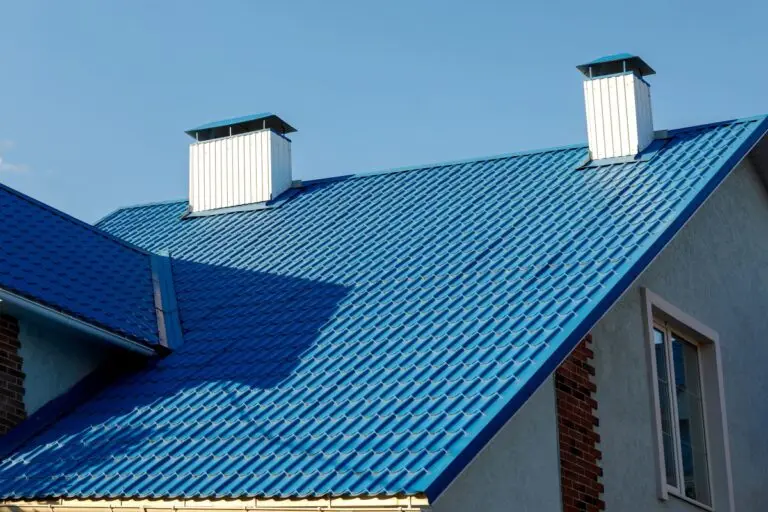
A metal roof is built to last for decades, but that longevity depends on more than the material itself. Without regular cleaning, even the most durable metal roofing system accumulates biological growth, surface oxidation, and debris that quietly compromise the finish and accelerate wear. Metal roof cleaning is one of the most cost-effective things a homeowner can do to protect their investment and extend the life of a system that was designed to outlast everything else on the house. If you want to understand what proper metal roof care actually involves, cleaning is where that conversation starts.
Here is what you will learn in this post:
- Why regular cleaning extends the life of a metal roof significantly
- 7 practical tips for cleaning a metal roof safely and effectively
- Which products and tools work on metal roofing and which ones cause damage
- How to identify and address the most common metal roof problems between cleanings
- When professional cleaning is the smarter choice over a DIY approach
- How a consistent maintenance routine protects your roof’s warranty and finish
Why Metal Roof Cleaning Does More Than Just Improve Appearance
Most homeowners think of cleaning as a cosmetic task, something done for curb appeal before a home sale or when the streaking becomes too noticeable to ignore. For metal roofing, cleaning is a maintenance function that affects long-term performance in ways that go well beyond how the roof looks from the street.
The factory-applied coating on a metal roof, whether a Kynar PVDF finish or a polyester system, is the primary barrier between the metal substrate and the elements. When algae, lichen, moss, and accumulated debris sit on that surface for extended periods, they introduce moisture and organic acids that break down the coating at a rate that no warranty was designed to cover. For homeowners in Canton, OH and surrounding areas, where humid summers and leaf-heavy fall seasons create ideal conditions for biological growth, staying ahead of that accumulation is a practical priority rather than an optional one. Here is why cleaning deserves to be treated as genuine maintenance rather than optional upkeep:
- Finish protection preserves the warranty: Most metal roofing manufacturers include maintenance requirements in their warranty terms. A roof that has not been cleaned and maintained according to those terms may lose warranty coverage precisely when it is needed most.
- Algae and lichen cause structural damage over time: Unlike surface dirt that washes off with rain, algae and lichen embed into the coating and hold moisture against the metal, creating the conditions that lead to early corrosion and coating failure.
- Early detection happens during cleaning: A cleaning session is also an inspection. Loose fasteners, compromised sealant, early rust at cut edges, and developing corrosion are all more visible and more catchable on a clean surface than on one covered with debris and biological growth.
- Reflectivity loss affects energy performance: Metal roofing earns a portion of its energy efficiency value from its ability to reflect solar radiation. Dirt, algae, and oxidation reduce that reflectivity and increase the heat transferred into the attic below, which raises cooling costs in ways that accumulate across seasons.
- A well-maintained roof holds its value: A metal roof that visibly shows neglect, with streaking, staining, and biological growth across its surface, signals deferred maintenance to buyers and appraisers in ways that affect property value even when the underlying system is structurally sound.
7 Tips to Keep Your Metal Roof Looking New
These seven tips address the most important aspects of metal roof cleaning, from safety and product selection through technique and timing. Each one is based on the specific properties and vulnerabilities of metal roofing systems rather than general roof cleaning advice that may not translate.
1. Safety First: Prepare Before You Get on the Roof
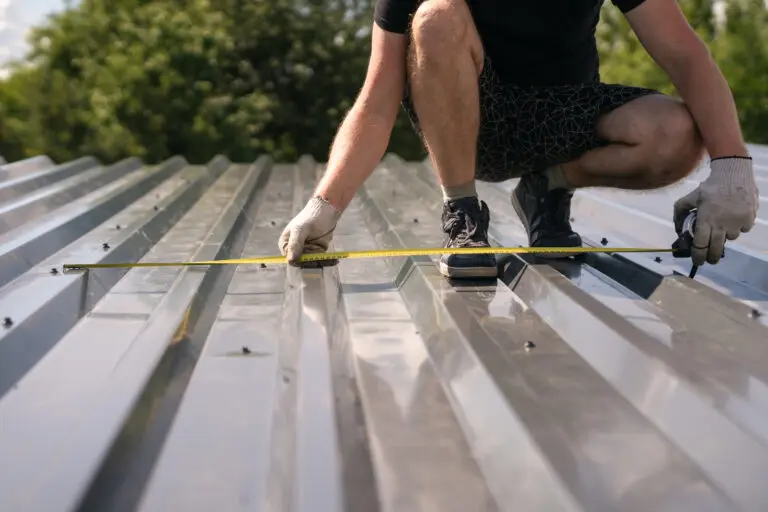
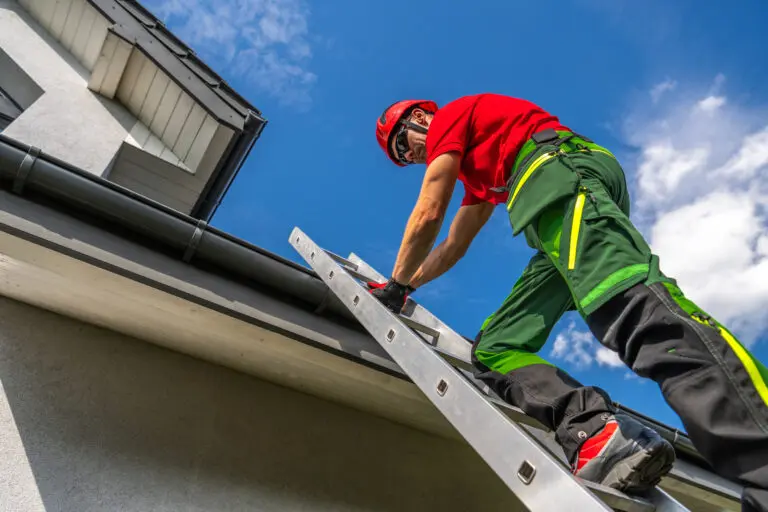
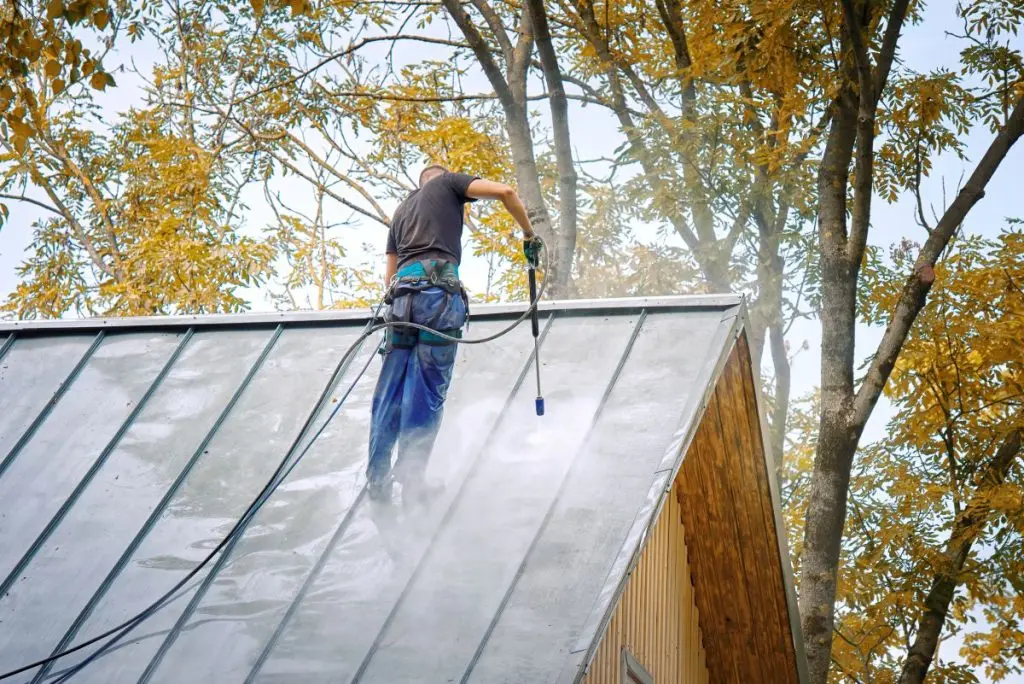
Metal roofing is more slippery than asphalt shingles under any conditions, and significantly more so when wet. The first rule of metal roof cleaning is that safety is not optional and not something to address after the fact. Homeowners who are not comfortable working at height with proper fall protection should treat professional cleaning as the default rather than the exception.
- Use rubber-soled shoes specifically rated for roofwork with strong grip on smooth surfaces
- Never begin cleaning on a wet surface or immediately after rain, even if the roof appears to have dried
- Use a properly rated ladder secured at both the top and base before accessing the roof
- A safety harness rated for roofwork anchored to a structural point on the ridge is appropriate for any pitch above 4:12
- Work with a partner on the ground to manage materials and assist in an emergency
2. Clear All Debris Before Any Cleaning Solution Is Applied
Leaves, pine needles, seed pods, and accumulated organic material should be removed from the entire roof surface before any wet cleaning begins. Applying cleaning solution to a debris-covered surface reduces the product’s contact with the coating, creates runoff that can damage landscaping and siding, and misses the organic material that is most likely to harbor biological growth.
A soft-bristled push broom or leaf blower on a low setting works well for dry debris. Pay particular attention to valleys, gutters, the perimeter around penetrations, and any horizontal shelf areas created by trim transitions where debris tends to collect and compact.
- Clear gutters and downspouts before cleaning begins so runoff can drain freely without backing up
- Remove any debris from inside valley flashing before applying solution, since trapped wet debris holds moisture and defeats the purpose of cleaning
- For homeowners in Canton, OH and surrounding areas, scheduling a cleaning in late spring after seed season and in early winter before snowfall keeps the worst debris from sitting on the surface through the high-humidity months
3. Use Low Pressure, Not High Pressure
This distinction is one of the most important and most frequently ignored in metal roof cleaning. High-pressure washing strips factory coatings, forces water under panel seams and laps, loosens exposed fasteners, and damages the finish in ways that are not immediately visible but that accelerate weathering and corrosion in the affected areas.
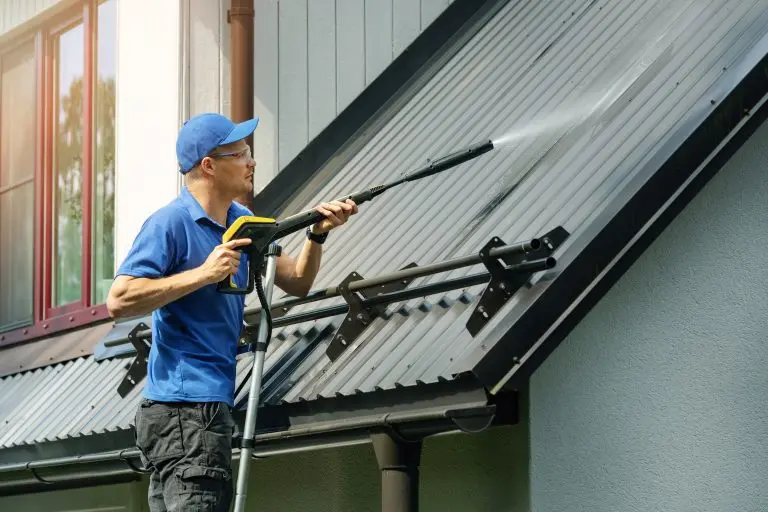
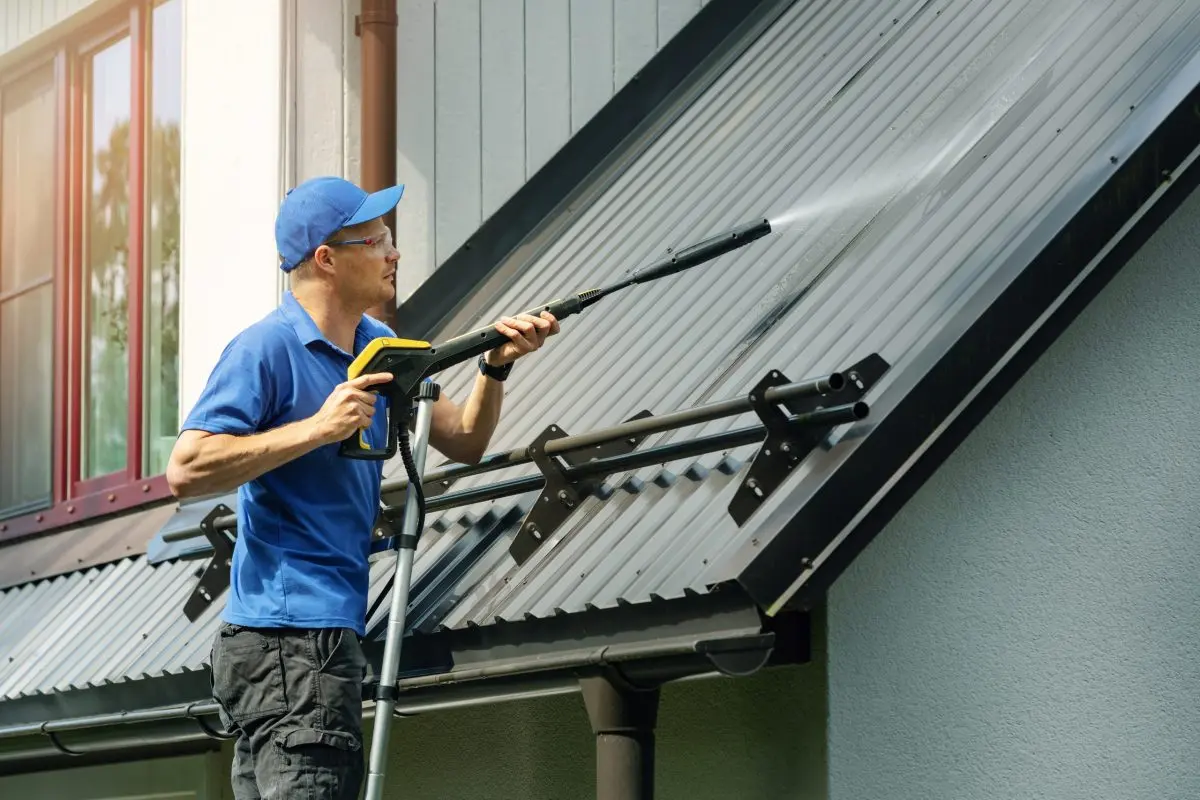
A standard garden hose with a spray nozzle set to a moderate stream is the appropriate tool for rinsing a metal roof. If a pressure washer is used at all, it should be set at or below 1,200 PSI with a wide-angle tip and kept at significant distance from the panel surface.
- Always direct water downward in the direction of panel overlap, never upward against the panels or into seam openings
- A fan-tip nozzle distributes pressure more broadly and reduces the risk of focused damage at any single point on the surface
- The goal of rinsing is to move cleaning solution and loosened material off the roof, not to use pressure as the primary cleaning mechanism
4. Select Cleaning Products Formulated for Metal Roofing
Not all cleaning products are safe for metal roofing, and the wrong product can strip coatings, cause discoloration, and initiate corrosion that is difficult to reverse. Standard bleach-based cleaners, muriatic acid, and abrasive compounds all fall into the category of products that can cause more damage than the biological growth or staining they are meant to address.
Safe options for most metal roofing systems include mild dish soap diluted in water for general surface cleaning, oxygen bleach solutions for algae and biological growth, and products specifically labeled as safe for painted or coated metal roofing. Before using any product on the full roof surface, test it on a small, inconspicuous area and check against the manufacturer’s care guidelines for the specific coating system on your roof.
- Avoid chlorine bleach at high concentrations, which can degrade certain coating formulations and create runoff that damages surrounding vegetation
- Sodium hypochlorite solutions at low concentration (typically 1 to 3 percent) are commonly used for algae treatment on metal roofing but should be verified against manufacturer guidance before application
- Rinse all cleaning solution off the surface thoroughly before it can dry, as dried cleaning product residue can leave staining that is harder to address than the original problem
5. Treat Algae, Moss, and Lichen With a Targeted Approach
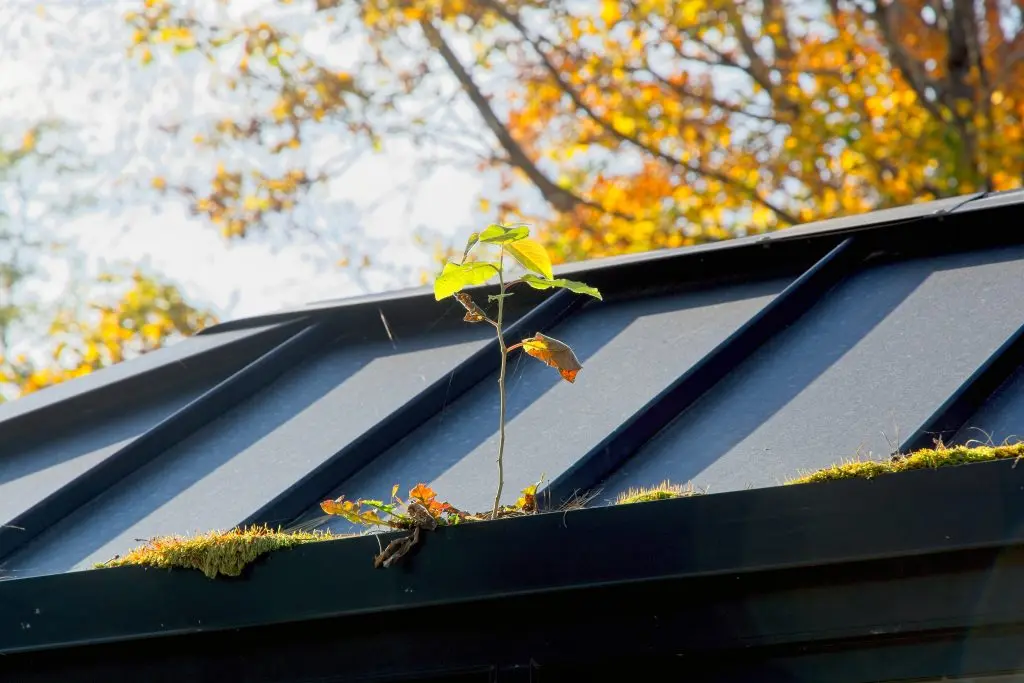
Biological growth is one of the most common and most consequential metal roof maintenance issues, particularly on shaded roof sections and in regions with seasonal humidity. The approach to treating it differs significantly from general dirt cleaning and requires product dwell time, careful technique, and appropriate rinsing rather than aggressive scrubbing.
Apply a diluted biological treatment solution directly to affected areas and allow it to dwell for the time specified on the product label, typically 10 to 20 minutes, before rinsing. Do not scrub vigorously, as abrasive action on algae and lichen often damages the coating surface beneath the growth rather than lifting the growth cleanly.
- Lichen bonds more aggressively to roofing surfaces than algae or moss and may require multiple treatment applications and extended dwell time before it releases
- After removing biological growth, consider zinc or copper strip installation near the ridge line as a long-term preventive measure, since rainwater flowing over these strips inhibits regrowth naturally
- In Canton, OH and surrounding areas, biological growth tends to appear first on north-facing and shaded roof sections where moisture retention is highest, making targeted treatment of those areas particularly important
6. Address Surface Rust and Oxidation Before They Progress
Surface rust and oxidation are the early warning signs of coating failure, and catching them during a cleaning session when the surface is clear and visible is one of the primary practical benefits of regular cleaning. Rust that is addressed at the surface stage is a maintenance task. Rust that has been allowed to penetrate the full panel thickness is a structural repair.
Surface rust typically appears first at cut edges, around fastener heads on exposed fastener systems, and in areas where the coating has been scratched or abraded. At this stage, it can be addressed with targeted rust-inhibiting primer after cleaning and drying the affected area, followed by touch-up paint matched to the original panel color.
- Sand or wire-brush the rust-affected area down to bare, clean metal before applying any treatment product
- Apply a rust-inhibiting primer rated for exterior metal surfaces and allow it to cure fully before topcoating
- Touch-up paint should be matched as closely as possible to the existing panel color, though some color shift from weathering over time means a perfect match on an older roof is rarely achievable without professional color matching
7. Schedule Cleaning at the Right Time of Year
Timing a metal roof cleaning session around seasonal and weather conditions makes the process safer, more effective, and less likely to produce unintended consequences. A few simple timing principles can make a meaningful difference in the outcome of each session.
Late spring and early fall are the most practical windows for metal roof cleaning in Northeast Ohio. Temperatures are moderate, biological growth is more responsive to treatment than in cold weather, and the timing positions the roof cleanly before the heavy debris season of late fall and before the freeze periods that make wet roof surfaces particularly hazardous.
- Avoid cleaning during periods of anticipated rain within 24 hours, as cleaning solution that has not had time to activate and rinse fully can be diluted or washed to areas where it was not intended to act
- Avoid cleaning in direct midday sun during summer, which causes cleaning solutions to evaporate before they have had the dwell time needed to work effectively
- Never clean during freezing temperatures, as water and solution can ice on the panel surface and create hazardous conditions both during the cleaning session and in the hours after
What to Watch Between Cleaning Sessions
Regular cleaning is the foundation of metal roof maintenance, but catching problems between scheduled sessions keeps small issues from developing into significant ones. A ground-level inspection with binoculars every few months takes minimal time and provides a reliable early warning system for the most common developing problems.
- Vertical dark streaking running down the panel surface from the ridge area is one of the earliest visible signs of algae growth and signals that a cleaning session is overdue before the growth has had time to establish deeply
- Rust-colored streaks near fastener locations or panel edges indicate that the protective coating has been compromised at those points and surface rust is developing, warranting closer inspection from the roof surface
- Chalky or faded surface appearance across large sections of the roof suggests oxidation is progressing and the factory finish is losing its integrity, which may indicate that a restoration coating is warranted
- Debris accumulation that persists in valleys and around penetrations between rain events suggests drainage is being impeded, which concentrates moisture against the metal surface and accelerates corrosion in those areas
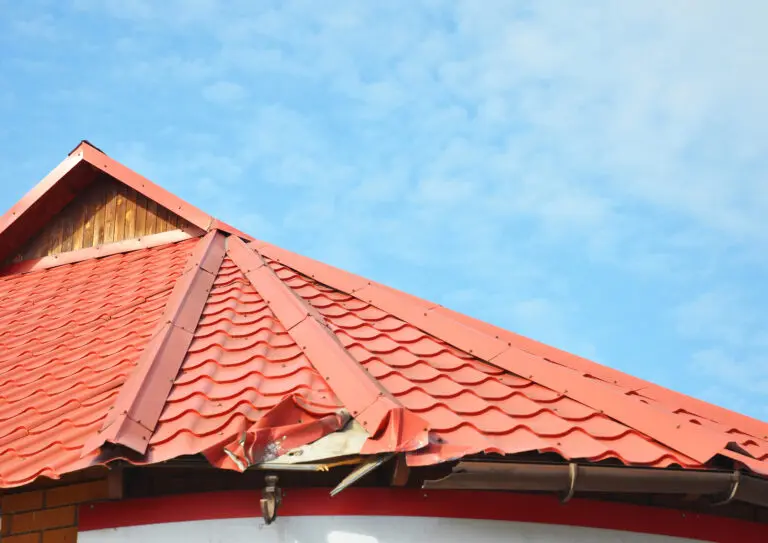
- Lifted or missing trim pieces along the ridge or rakes are often visible from the ground and represent an immediate water infiltration risk that should be addressed before the next rain event
DIY Cleaning vs. Professional Metal Roof Cleaning: Knowing When to Call
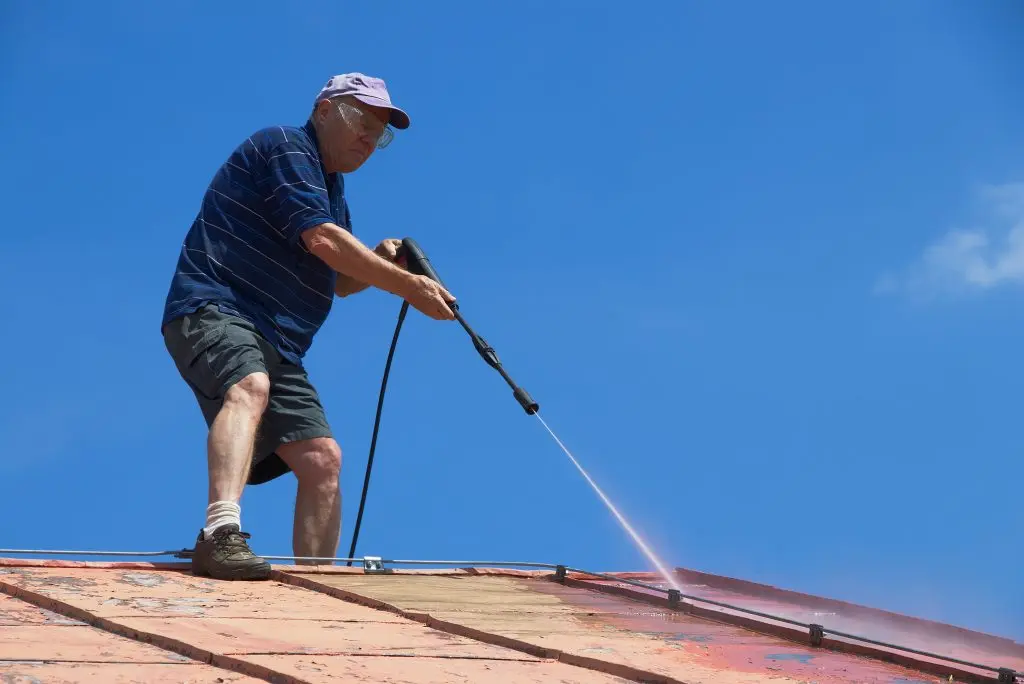
Some metal roof cleaning scenarios are well within the capabilities of a careful homeowner with the right products and safety equipment. Others are situations where professional cleaning delivers a meaningfully better outcome and reduces the risk of damage that costs more to address than the cleaning would have.
When DIY Makes Sense
A single-story home with a moderate pitch, light to moderate surface soiling, and no significant biological growth or rust development is a reasonable DIY cleaning scenario. With the right products, appropriate tools, and proper safety precautions, a homeowner can maintain this type of roof effectively between professional inspections.
When Professional Cleaning Is the Right Call
Two-story homes, steep roof pitches, extensive biological growth, lichen infestations, oxidation covering large surface areas, or any situation involving rust treatment beyond isolated spot work are scenarios where professional cleaning produces better results with significantly lower risk of damage or injury. Professional cleaning also typically includes an inspection component that gives homeowners a documented condition assessment useful for warranty purposes and future maintenance planning.
For homeowners in Canton, OH and surrounding areas who are unsure which category their roof falls into, a professional assessment before committing to a DIY approach is a low-cost way to make that determination with accurate information rather than guesswork.
Keep Your Metal Roof Performing Like It Was Installed Yesterday
A metal roof that is cleaned and maintained consistently looks better, performs better, and lasts significantly longer than one that is ignored between major repairs. The difference between a metal roof that reaches its full 40 to 70-year service life and one that needs restoration or replacement decades early is almost always traceable to maintenance decisions made along the way.
At Keim Quality Roofing, we help homeowners throughout Canton, OH and surrounding areas keep their metal roofs in the condition they were installed to maintain. Whether you need a professional cleaning, a post-storm inspection, or honest guidance on the right maintenance schedule for your specific system, our team has the experience and the tools to help you get there. Contact us today and let Keim Quality Roofing protect the investment you have made in your home.