What Does Hail Damage Look Like on Siding? 6 Things to Look For
After a hail storm rolls through, most homeowners check the roof and call it a day. But siding takes a beating too, and the damage is not always as obvious as a cracked panel or a hole in the wall. Knowing what does hail damage look like on siding before you walk your property can mean the difference between a complete insurance claim and a missed one. The signs vary by material, storm intensity, and how long ago the damage occurred. If you want to understand how hail affects your entire home exterior, siding is a critical piece of that picture.
Here is what you will learn in this post:
- Why hail damage to siding is easy to miss and costly to ignore
- 7 specific things to look for when inspecting siding after a storm
- How hail damage looks different across vinyl, fiber cement, and wood siding
- What signs indicate damage severe enough to file an insurance claim
- How to document siding damage before a contractor or adjuster arrives
- What the repair and claims process looks like from inspection to completion
Why Identifying Hail Damage on Siding Matters More Than You Think
Hail damage to siding rarely announces itself the way a missing shingle or a flooded basement does. It tends to be subtle at first, a cluster of small dents here, a hairline crack there, a section of paint that looks slightly off. That subtlety is exactly what makes it dangerous. Homeowners who do not know what to look for often walk past significant damage without recognizing it, miss the insurance filing window, and end up paying out of pocket for repairs that a claim would have covered.
For homeowners in Massillon, OH and surrounding areas, hail is a seasonal reality that arrives with varying intensity from spring through early fall. A storm that drops dime-sized hail for twenty minutes may leave behind thousands of dollars of siding damage that looks from the street like nothing happened at all. Here is why taking this inspection seriously pays off:
- Insurance claims have strict timelines: Most homeowner’s policies require storm damage to be reported within 30 to 60 days of the event. Missing that window because you did not recognize the damage in time forfeits coverage you have been paying for.
- Small damage escalates quickly: A hairline crack in a vinyl panel or a dent that compromises the surface of fiber cement allows moisture to penetrate behind the siding, where it silently damages sheathing, insulation, and framing over months and years.
- Hail damage is a covered peril: Unlike wear and tear or neglect, hail damage is specifically covered under virtually every standard homeowner’s insurance policy, making proper identification and documentation directly valuable in dollar terms.
- Damage patterns help tell the full story: The pattern, density, and character of hail impacts across your siding surface provide evidence of storm intensity that supports the broader claim across roofing, gutters, and other exterior components.
- Professional documentation strengthens your position: A licensed contractor who can identify and document hail damage to siding before an insurance adjuster arrives gives you an independent assessment that protects your claim from being minimized.
6 Things to Look For When Inspecting Siding for Hail Damage
Hail damage on siding has specific visual signatures that distinguish it from normal wear, age-related cracking, or installation defects. Knowing these signs before you walk your property gives you a much clearer picture of what you are actually looking at.
1. Circular Dents or Impact Marks
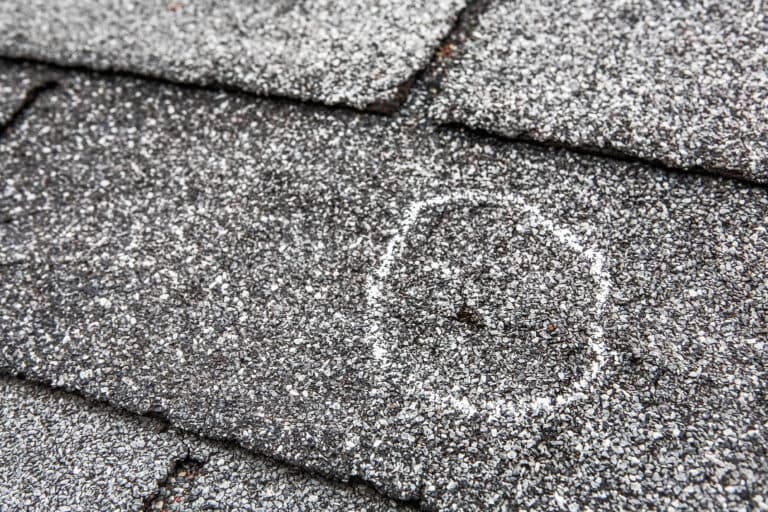
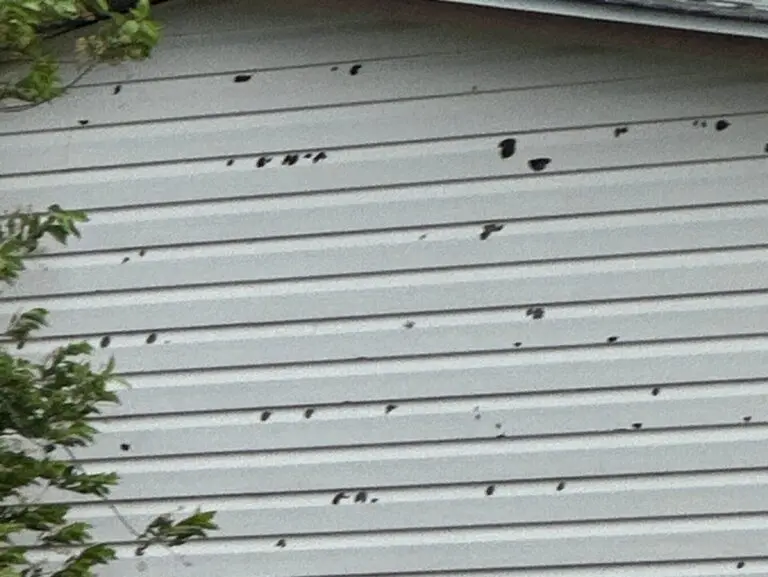
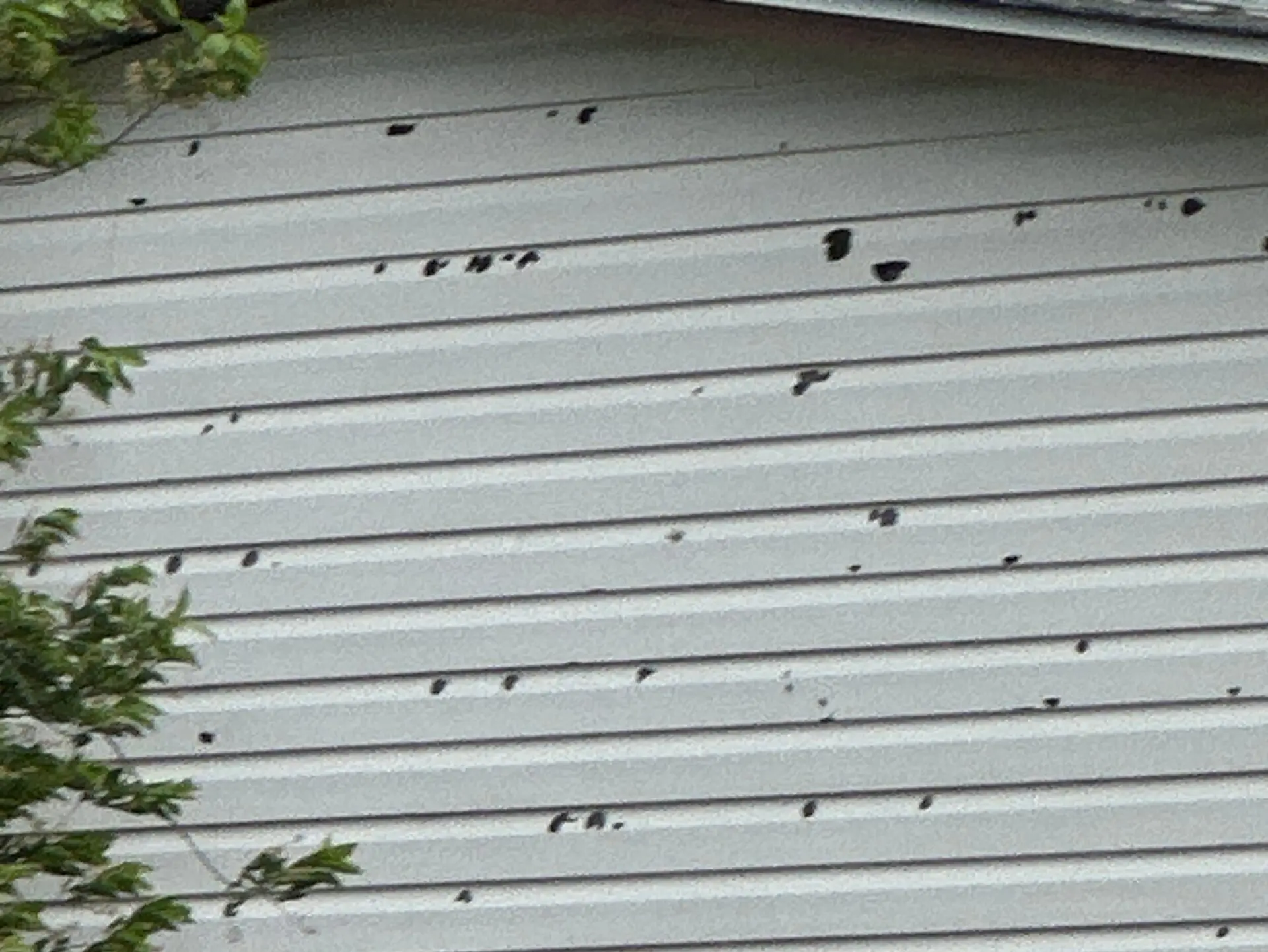
The most recognizable sign of hail damage on any siding material is a circular or oval impact mark left where a hailstone struck the surface. On metal siding and aluminum trim, these appear as clear concave dents. On vinyl siding, the impact mark may be more subtle, appearing as a slight depression or discoloration at the point of contact rather than a deep dent.
- The size of the impact marks corresponds roughly to the size of the hailstones that caused them
- Impact marks tend to cluster on the elevations facing the storm’s direction of travel, typically the north or west facing sides of the home
- On vinyl, look for marks that appear lighter or shinier than the surrounding panel surface, indicating the material was stressed at that point
2. Cracked or Split Panels
Vinyl siding becomes more brittle in cold temperatures, and hail that strikes during colder months or in the early morning when temperatures are low can crack panels cleanly rather than simply denting them. These cracks may run horizontally along the panel face or radiate outward from the impact point in a spider-web pattern.
Even in warmer conditions, large hailstones with sufficient velocity can split vinyl panels on impact. Homeowners in Massillon, OH and surrounding areas who experience storms with golf ball-sized hail or larger should inspect every elevation carefully for cracking, not just the most exposed faces.
- Cracks that run along the bottom locking edge of a panel are particularly common and easy to miss without close inspection
- A cracked panel that has not yet separated allows water to enter the wall cavity on every subsequent rain event
- Any crack that goes through the full thickness of the panel requires replacement, not patching
3. Punctures or Holes
In severe hail events, large stones traveling at high velocity can puncture siding panels entirely, leaving a visible hole or a section of panel that has been pushed inward against the wall. Punctures are most common on older vinyl that has become brittle with age and on thinner panel grades.
A puncture is the most urgent type of hail damage because it creates an immediate, unobstructed path for water, pests, and air infiltration into the wall cavity. Any puncture discovered during a post-storm inspection should be temporarily covered with waterproof tape until a contractor can assess and repair the section.
- Punctures may be obscured by debris or by sections of panel that have folded inward rather than breaking away cleanly
- Check behind downspouts and in corners where debris may cover impact sites
- Even small punctures the size of a coin represent a serious moisture infiltration risk
4. Paint Chipping or Gouging on Fiber Cement and Wood Siding
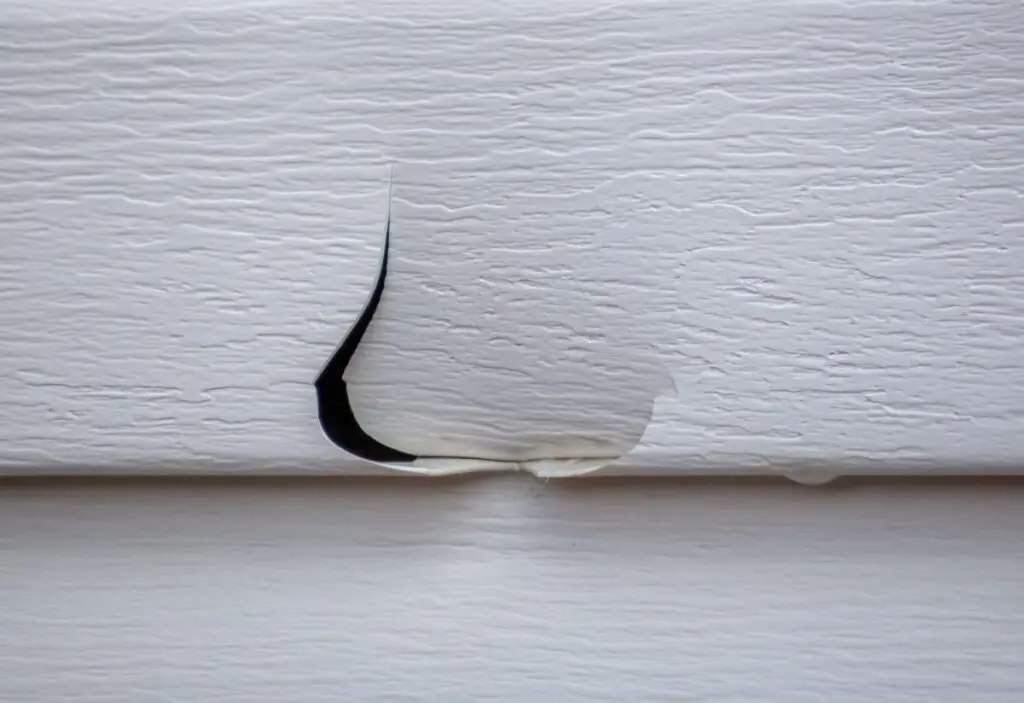
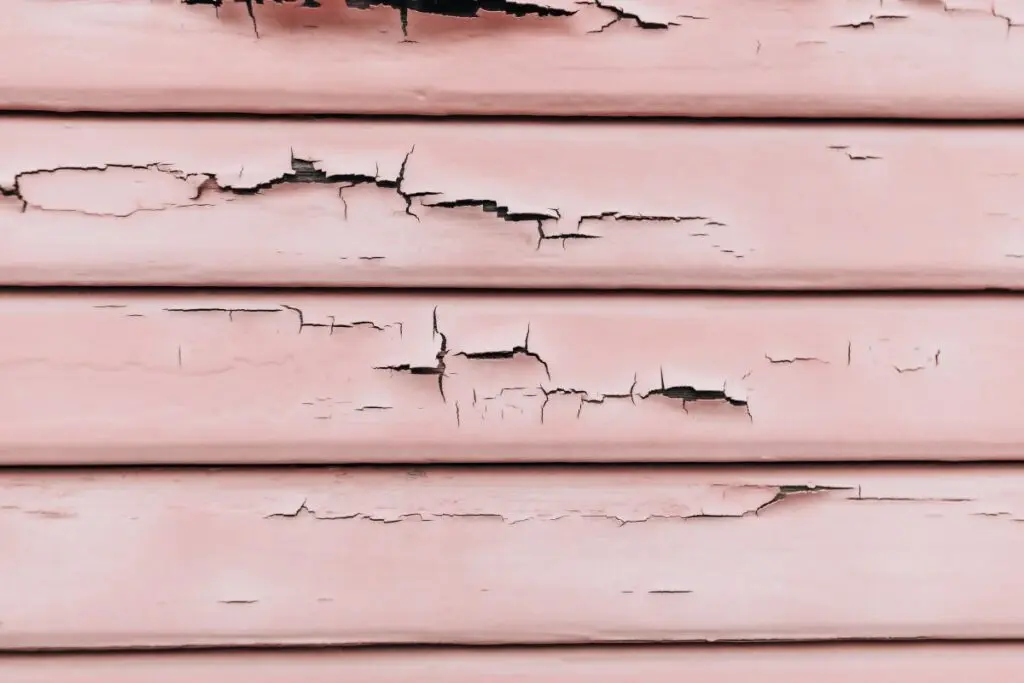
On fiber cement and wood siding, hail impacts do not always crack or break the panel. Instead, they gouge the surface and chip away the protective paint layer, exposing the substrate beneath to direct moisture contact. These marks appear as bright spots or raw material patches against the painted surface.
Fiber cement that has lost its paint coating at impact sites will begin to absorb moisture at those locations, which can cause the material to swell, delaminate, or develop surface cracks over time. Wood siding with paint chipped away at impact sites is similarly vulnerable to moisture penetration and rot if left unaddressed.
- Look for clusters of bright spots on painted fiber cement or wood elevations that correspond to impact patterns
- Run your hand across the surface carefully to feel for raised or rough spots where the paint coat has been disrupted
- Gouges that reach the raw material surface require priming and painting at minimum, and full section replacement if the substrate has been compromised
5. Dented or Bent Trim, Corner Posts, and J-Channel
Hail damage to siding almost always includes damage to the aluminum or vinyl trim pieces that finish the installation at corners, windows, doors, and roof transitions. These components are thinner than field panels and show impact damage more readily, making them one of the most reliable indicators that the broader siding surface has sustained damage as well.
Dented J-channel around windows and doors is particularly significant because it compromises the weathertight seal at every opening in the wall. Bent corner posts allow water to infiltrate behind the siding at the home’s most exposed vertical edges. These trim components may look like cosmetic damage, but their functional role makes them a priority in any storm damage assessment.
- Check aluminum window and door surrounds for denting patterns that match the hailstone size and storm direction
- Bent or deformed corner posts should prompt a careful inspection of the siding panels on both adjacent faces
- Damaged J-channel is often approved for replacement under insurance claims even when the surrounding panel damage appears minimal
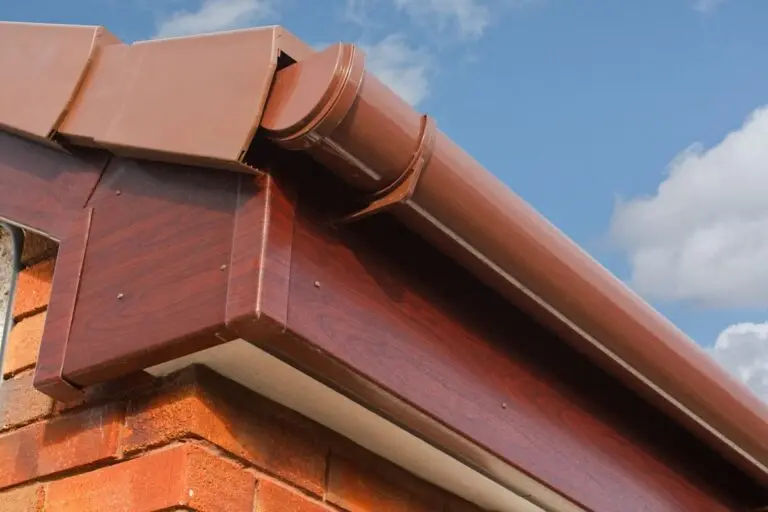
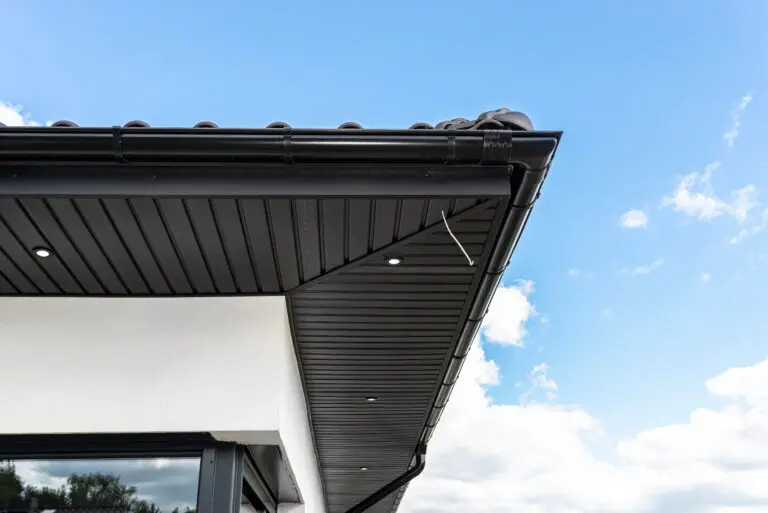
6. Damage to Soffit and Fascia
Soffits and fascia sit at the transition between the wall and the roof and are exposed to hail from both above and the side. Soffit panels made from vinyl or aluminum dent readily under hail impact, and damaged sections create entry points for moisture and pests into the attic and wall cavity above the fascia board.
Fascia boards, whether wood or composite, can sustain surface gouging and paint loss similar to what hail does to fiber cement siding. Aluminum fascia covers show denting that mirrors the impact pattern visible on other metal components around the home.
- Inspect soffit panels from multiple angles since denting may only be visible from specific lighting conditions
- Damaged soffit and fascia are typically part of the same insurance claim as siding damage when caused by the same storm event
- Soffit ventilation openings that have been deformed by hail impact can restrict attic airflow, creating secondary problems beyond the structural damage itself
How Hail Damage Looks Different Across Siding Materials
The visual signatures of hail damage vary meaningfully depending on what your siding is made of. Knowing what to look for on your specific material makes your self-inspection far more accurate.
Vinyl Siding
Vinyl is the most common residential siding material and responds to hail with a specific set of visual cues. Impact marks on vinyl appear as slight surface depressions, discoloration, or stress whitening at the point of contact. In colder weather, clean cracks are common. In warmer conditions, impacts may leave dents without full panel failure. The locking channels at the top and bottom of each panel are particularly vulnerable to cracking.
Fiber Cement Siding
Fiber cement is more impact-resistant than vinyl but shows damage differently. Rather than cracking cleanly, fiber cement tends to chip and gouge at impact sites, stripping the paint coat and exposing the raw material beneath. Edge and corner damage is more common than face damage on thicker fiber cement panels.
Wood Siding
Wood siding responds to hail with surface gouging, paint loss, and in severe cases, splitting along the grain at impact sites. Older painted wood siding is particularly vulnerable because the paint coat may already be compromised, giving moisture an easy path into the wood at any new impact site.
Aluminum Siding
Aluminum siding dents clearly and consistently under hail impact, making it one of the easiest materials on which to identify and document damage. The dent pattern on aluminum is also one of the most persuasive forms of evidence in an insurance claim because it mirrors the hailstone size and storm direction so visibly.
What to Do After You Identify Hail Damage on Your Siding
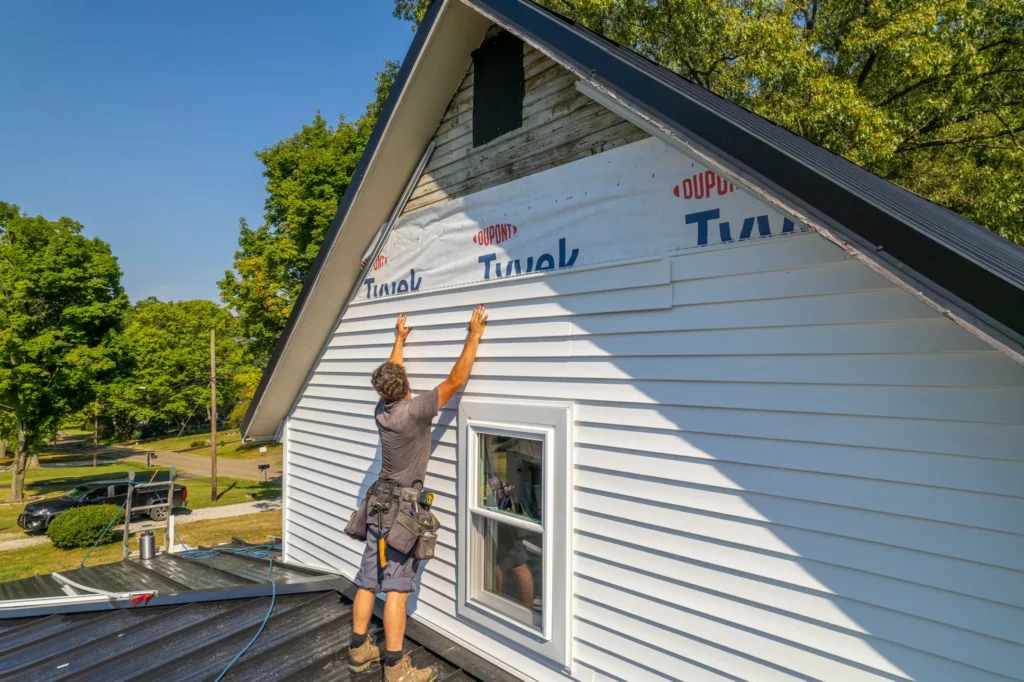
Finding hail damage on your siding sets a specific series of actions in motion that protect both the physical integrity of your home and your ability to make a successful insurance claim.
- Photograph everything before any repairs are made. Document every impact mark, crack, puncture, and dented trim piece with clear, well-lit photographs. Include wide shots that show the full elevation and close-up shots that capture individual damage points. Note the date and time of each photograph and save any weather service records or news reports confirming the storm event.
- Contact a licensed contractor for a written inspection report. A professional inspection report that identifies the type, extent, and location of hail damage across your siding, roofing, gutters, and trim is one of the most valuable documents you can have when filing an insurance claim. In Massillon, OH and surrounding areas, scheduling this inspection promptly after a storm ensures the damage is assessed before any weathering obscures the impact evidence.
- File your insurance claim promptly. Do not wait until repairs are scheduled to contact your insurer. File the claim as soon as you have documented the damage and have your contractor’s inspection report in hand. Most policies have reporting deadlines that, once missed, cannot be extended regardless of how clear the damage evidence is.
- Have your contractor present during the adjuster inspection. An insurance adjuster’s assessment is not always complete, particularly on less obvious damage like vinyl stress marks or paint chip patterns on fiber cement. Having your contractor present to walk the adjuster through every documented damage point ensures the full scope of the claim is captured.
Do Not Let Hail Damage Go Unaddressed
Hail damage to siding is one of the most consistently underreported types of storm damage, and it is almost always because homeowners did not know what to look for or did not think what they saw was significant enough to report. Both of those problems are solvable.
At Keim Quality Roofing, we inspect homes throughout Massillon, OH and surrounding areas after every significant storm event with the same thorough, systematic approach to siding, roofing, gutters, and trim. We know what hail damage looks like across every material, we document it clearly, and we work directly alongside insurance adjusters to make sure our clients get the full value of their coverage. If your home was in the path of a recent hail storm and you want a professional assessment before the claims window closes, contact us today and let Keim Quality Roofing put their experience to work for you.