Chimney Flashing Repair Needed? 6 Signs to Watch For
Water stains on the ceiling near the fireplace wall. A damp smell after rain. Rust streaks on the chimney face. These are the kinds of details homeowners notice and often dismiss as minor until the damage behind them becomes anything but. Chimney flashing repair is one of the most commonly needed and most frequently delayed roofing repairs, and the gap between noticing a problem and addressing it is where most of the real damage occurs. If you want to understand how chimney flashing fits into the broader health of your roof system, this guide covers everything worth knowing before you call a contractor.
Here is what you will learn in this post:
- What chimney flashing is and why it is the most vulnerable part of your roof
- 7 specific signs that indicate chimney flashing repair is needed
- What causes flashing to fail and how quickly problems escalate
- How chimney flashing repair actually works from inspection through completion
- The difference between a repair and a full reflash, and when each applies
- How to choose a contractor who handles flashing correctly rather than just covering up the problem
Why Chimney Flashing Failures Cause Roof Leaks and More Damage Than Most Homeowners Expect
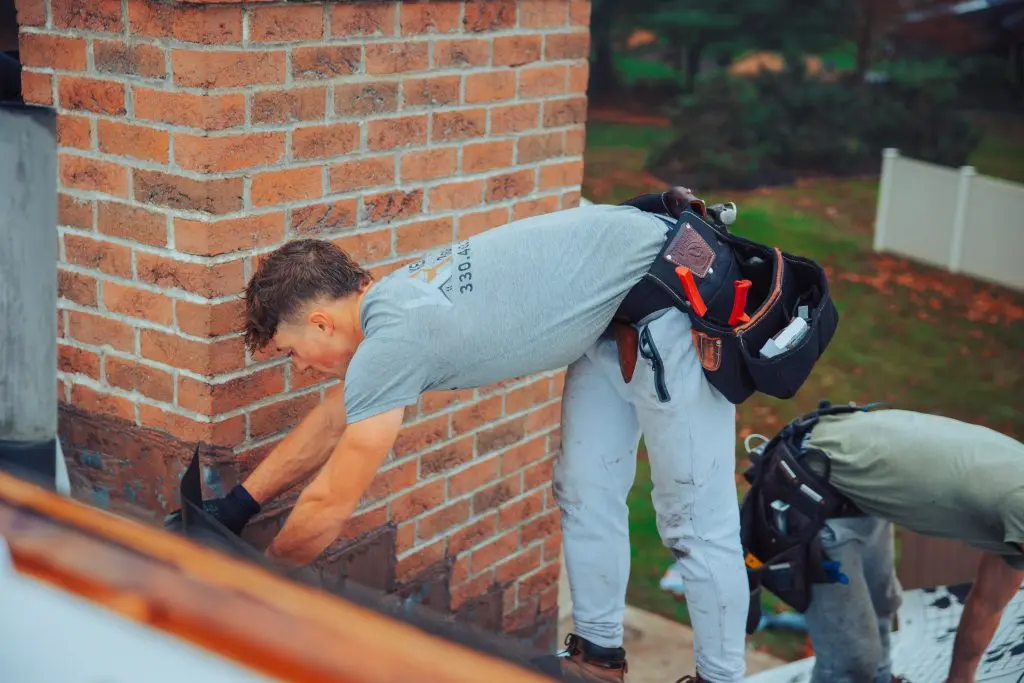
The chimney is one of the most structurally complex transitions on any residential roof. It is a masonry or metal structure that penetrates the roof plane from below, creating a junction between two materials that expand and contract at different rates through every temperature change. That constant differential movement is exactly what chimney flashing is designed to manage, and it is also what eventually causes flashing to fail even when it was originally installed correctly.
When flashing fails, it does not announce itself with an immediate waterfall. Water infiltration at a chimney typically moves laterally through wall cavities, along framing members, and into insulation before it ever appears on an interior surface. By the time a ceiling stain is visible in a home in Dover, OH and surrounding areas, the water has often been traveling a circuitous path through the structure for weeks or months, silently saturating materials along the way. Here is why addressing flashing problems early matters so much:
- The damage path is hidden and cumulative: Water infiltrating at the chimney base does not travel straight down. It follows framing, insulation, and wall cavities, and the saturated materials along that path develop mold, rot, and structural weakness before any visible sign appears.
- The repair window is time-sensitive: A minor sealant failure caught in its first season is a one-afternoon repair. The same failure left through a full winter of freeze-thaw cycling can open gaps that require full reflashing and interior remediation.
- Chimney flashing failure is the most common cause of fireplace-area roof leaks: The transition between the chimney and the roof is one of the most failure-prone joints in residential construction, and it is responsible for a disproportionate share of roofing-related insurance claims and contractor callbacks.
- Improper repairs create new problems: One of the most common chimney flashing mistakes is covering a failing system with roofing sealant rather than repairing the underlying component. This approach delays rather than prevents water infiltration and makes the eventual proper repair more expensive by adding layers to be removed.
- A properly flashed chimney protects the rest of the roof system: When flashing fails and water enters the roof deck around the chimney, it does not stay localized. Saturated decking, compromised underlayment, and water migrating under adjacent shingles can require repairs well beyond the chimney itself.
7 Signs of Chimney Flashing Issues That Need Repair
These seven signs are the most reliable indicators that chimney flashing has failed or is in the process of failing. Some are visible from the ground. Others require a closer look from the roof surface or from inside the attic. All of them deserve prompt attention rather than a wait-and-see approach.
1. Water Stains on Ceilings or Walls Near the Chimney
Interior water stains near the fireplace wall or on the ceiling adjacent to where the chimney passes through the roof are the most common symptom homeowners notice first. Because water travels before it surfaces, these stains may appear several feet from the actual infiltration point, which is one of the reasons chimney flashing failures are sometimes initially misdiagnosed as roof leaks in the wrong location.
- Stains that appear or worsen after rain events and improve during dry periods are strongly indicative of active water infiltration rather than condensation or plumbing issues
- Staining on the chimney breast inside the home, particularly above the fireplace opening, may indicate flashing failure rather than chimney cap or crown problems
- Any staining that corresponds with the location of the chimney on the exterior should be assumed to be flashing-related until a professional inspection rules it out
2. Visible Rust or Corrosion on the Flashing Metal
Chimney flashing is typically fabricated from galvanized steel, aluminum, or copper. Galvanized and aluminum flashings are susceptible to corrosion over time, particularly at cut edges, fastener locations, and areas where dissimilar metals are in contact. Visible rust on the flashing surface is not merely cosmetic. It indicates that the protective coating has failed and the metal itself is degrading.
Rust at flashing joints and step flashing locations is particularly significant because these are the areas where water management depends most on the integrity of the metal. A rusted joint that has not yet opened is on its way to opening, and addressing it before that happens is far less disruptive than addressing it after.
- Surface rust that has not yet pitted or perforated the metal can sometimes be treated with rust-inhibiting primer and sealant as a temporary measure while full reflashing is planned
- Rust that has created holes or perforations in the flashing metal requires immediate replacement because no sealant is a reliable long-term substitute for intact metal
- Copper flashing develops a green patina over time that is entirely normal and does not indicate deterioration
3. Separated or Lifted Flashing at the Chimney Base
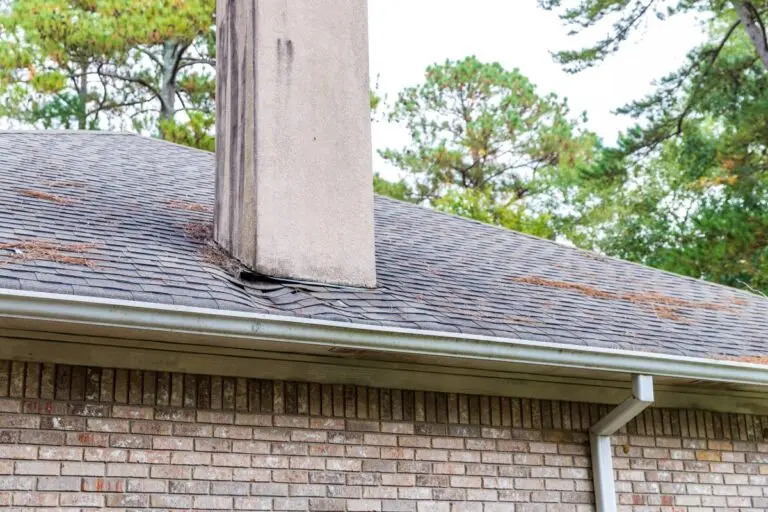
The flashing at the base of a chimney, called the apron or front flashing, seals the transition between the chimney face and the roof surface directly below it. When this component lifts, buckles, or separates from either the chimney face or the roofing material below, the gap it creates is a direct water entry point during any rain event.
Physical separation is often caused by the differential thermal movement between the masonry chimney and the metal flashing, by deteriorated sealant at the embedded upper edge of the flashing, or by the gradual failure of the mortar bed or counter flashing that holds the upper edge of the flashing against the chimney face.
- Flashing that appears wavy, buckled, or lifted at its edges rather than lying flat against both surfaces it seals is failing and requires repair
- Gaps visible between the flashing metal and the chimney face, even small ones, are active infiltration pathways
- In Dover, OH and surrounding areas, the combination of freeze-thaw cycles and periodic high winds accelerates this type of separation faster than in more moderate climates
4. Missing or Deteriorated Counter Flashing
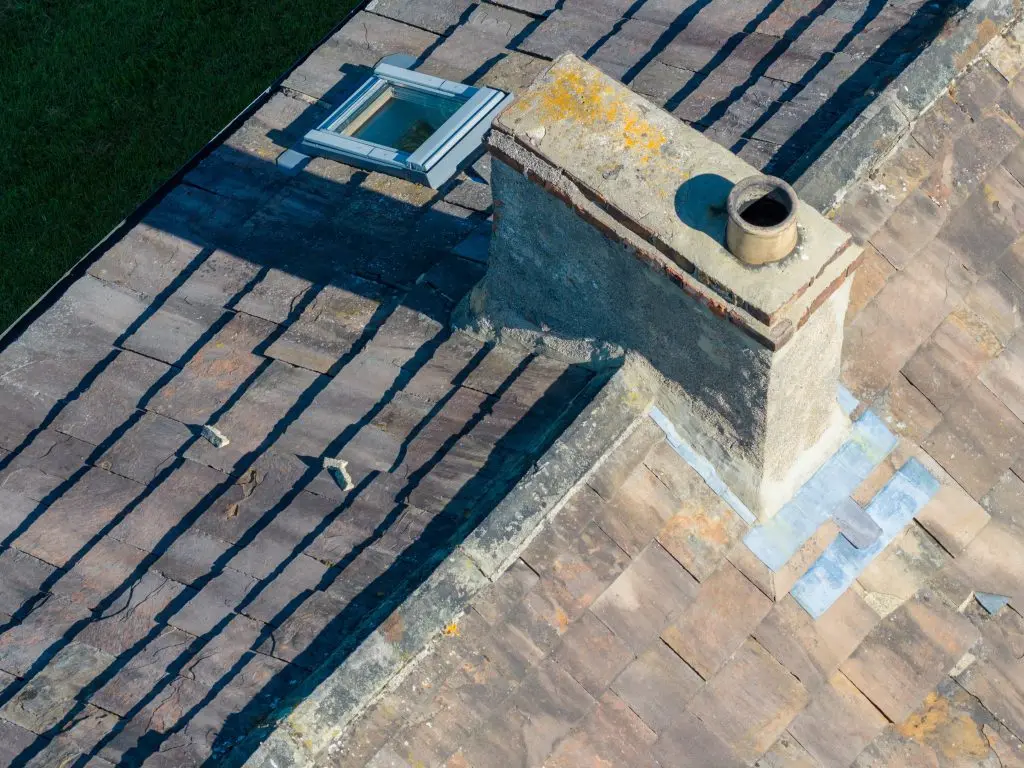
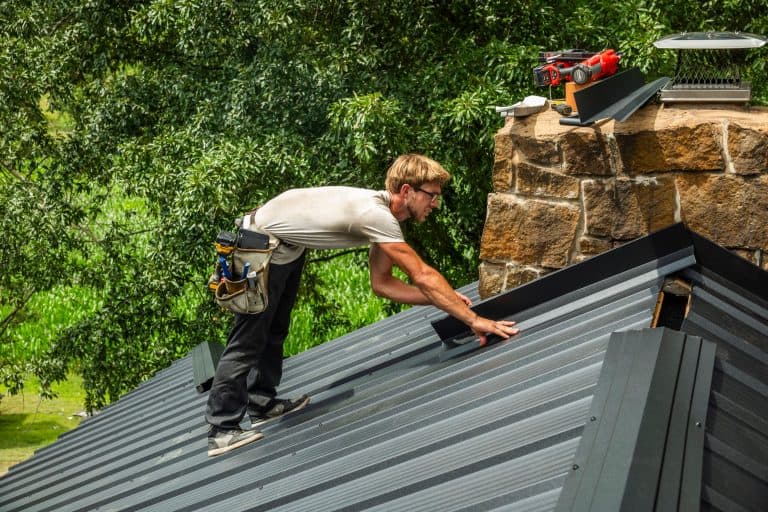
Chimney flashing is a two-part system. The base flashing, sometimes called step flashing along the sides, is installed beneath the shingles and laps up against the chimney face. The counter flashing is embedded into the mortar joints of the chimney itself and folds down over the top of the base flashing, creating a weathertight overlap. When the counter flashing is missing, pulled away, or the mortar joint anchoring it has cracked and released it, the two-part system no longer functions as designed.
Missing counter flashing is one of the most common installation errors seen on both older homes and improperly reroofed homes, where contractors replaced shingles and base flashing without addressing the counter flashing above it.
- Counter flashing that has been pulled away from the mortar joint by hand pressure, or that visibly shows daylight between its face and the chimney masonry, is not sealing the system
- Cracked mortar joints at the counter flashing reglet are a common entry point for water even when the flashing itself appears intact
- The repair for failed counter flashing involves cutting a new reglet into the mortar, installing new counter flashing, and sealing the joint with appropriate flashing sealant
5. Cracked or Failed Sealant Around the Chimney Perimeter
Many chimney flashings rely on a continuous bead of flashing sealant at the transition between the metal and the chimney face, at the upper edge of the apron flashing, and at the termination points of the step flashing along the sides. This sealant is a maintenance item rather than a permanent solution, and it requires periodic inspection and renewal as part of a standard roof maintenance schedule.
Sealant that has cracked, pulled away from one or both surfaces, or developed gaps and voids is no longer performing its sealing function. In colder climates, this deterioration is accelerated by thermal cycling, and sealant applied in inappropriate temperature conditions may fail within a single season.
- Sealant failure is often the first sign of a flashing system approaching the end of its serviceable life, since sealant degrades faster than the underlying metal
- Renewing sealant on an otherwise sound flashing system is a legitimate short-term repair, but it should not be used as a substitute for replacing deteriorated or improperly installed flashing components
- Homeowners in Dover, OH and surrounding areas should include chimney flashing sealant in their annual spring inspection checklist following the stress of the winter season
6. Daylight Visible Around the Chimney From Inside the Attic
An attic inspection after a significant rain event is one of the most reliable ways to confirm active chimney flashing infiltration. With a flashlight and access to the attic space, the area where the chimney penetrates the roof structure can be examined for daylight gaps, staining on the framing, wet or discolored insulation, and active water movement on the chimney face or surrounding structure.
Any visible daylight around the chimney penetration indicates a gap in the flashing or underlayment system that is allowing water infiltration regardless of whether interior staining is yet visible below. This is one of those situations where catching a problem in the attic before it reaches the ceiling saves significant remediation cost.
- Wet or dark-stained framing members around the chimney base indicate ongoing rather than historical infiltration
- Mold or mildew on wood surfaces in the chimney area signals that moisture has been present long enough to support biological growth
- Insulation that is compressed, discolored, or visibly wet should be replaced after the flashing repair is completed, as saturated insulation does not recover its insulating value after drying
The Chimney Flashing Repair Process: How Reflashing Actually Works
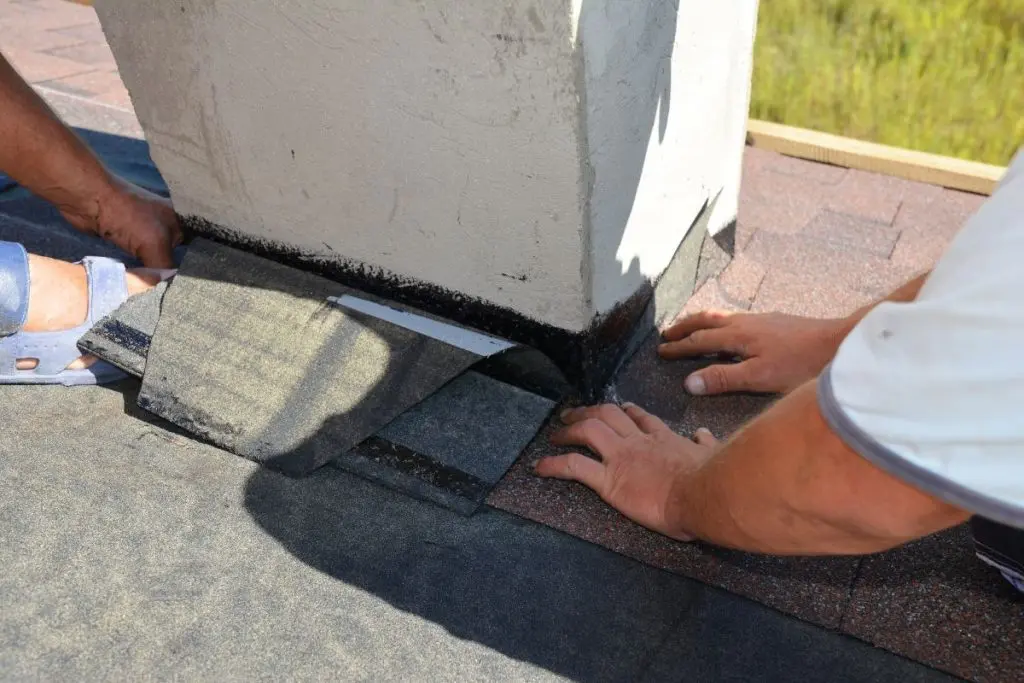
Understanding what a proper chimney flashing repair involves helps homeowners evaluate proposals accurately and recognize when a contractor is offering a real solution versus a temporary cover-up. The scope of the repair depends on what is failing and how extensively.
Sealant Renewal
The simplest and least invasive repair involves cleaning the existing flashing surfaces, removing deteriorated sealant, and applying fresh product at all transition points. This is appropriate when the flashing metal is intact and properly positioned, the counter flashing is secure in the mortar joint, and the only failure is the sealant itself. It is a maintenance repair rather than a structural one and typically carries a shorter expected service life than a full reflash.
Partial Flashing Repair: When It Makes Sense
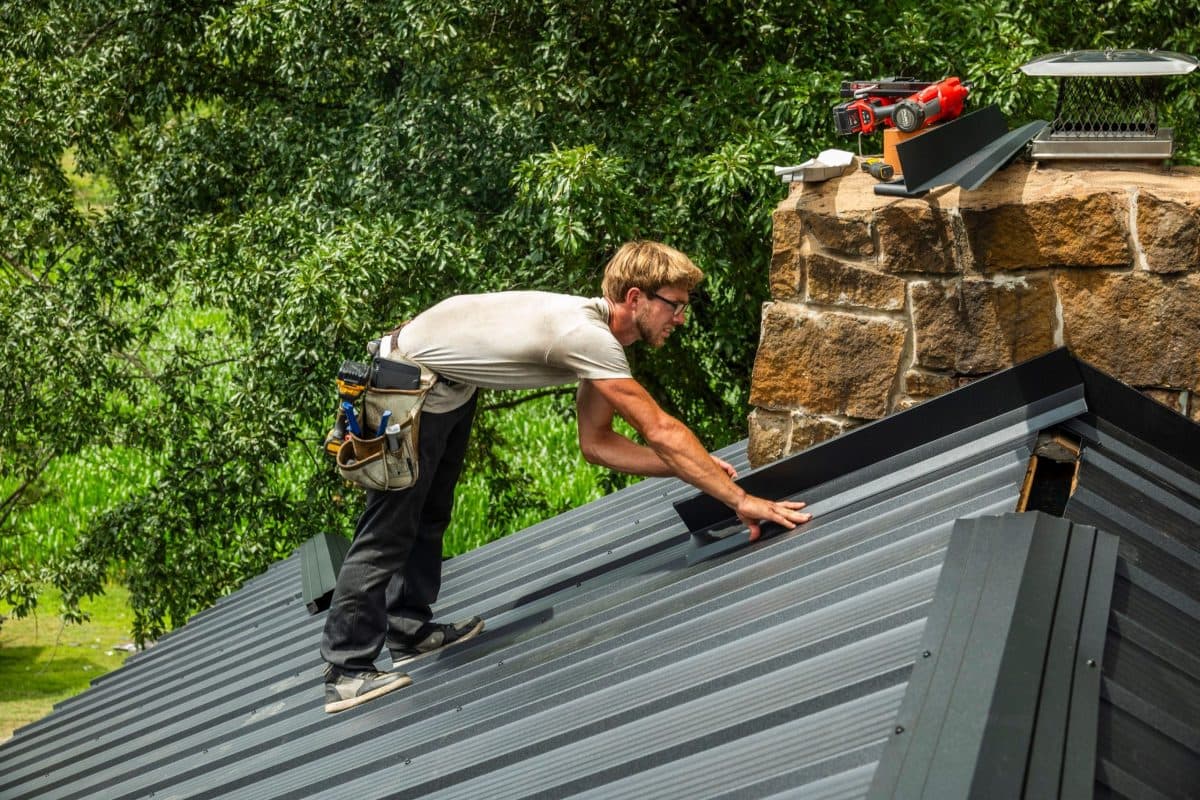
When individual components of the flashing system have failed while others remain serviceable, a partial flashing repair replaces only the failing elements. A common example is replacing deteriorated step flashing along one side of the chimney while the apron and counter flashing on the other sides remain sound. This is a cost-effective approach when the diagnosis is accurate and the retained components are genuinely in serviceable condition.
Full Reflash
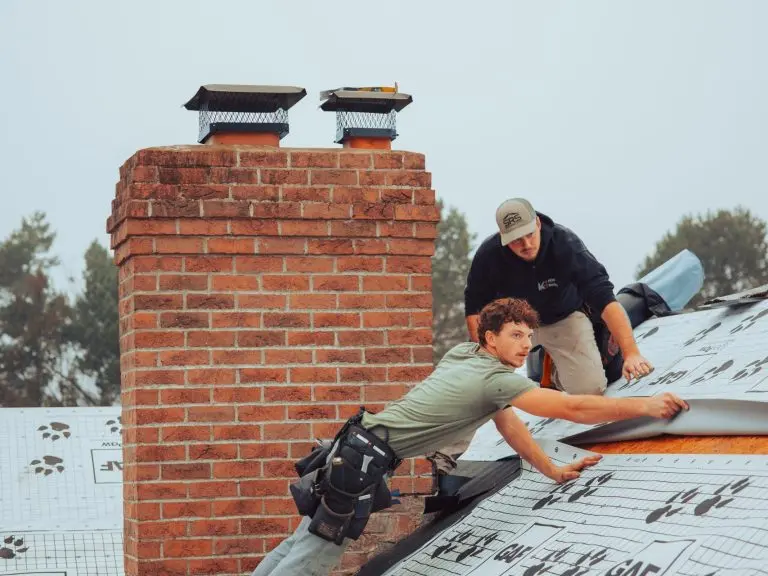
A full reflash removes all existing flashing components, inspects the underlying roof deck and masonry for damage, and installs a complete new flashing system. This is the appropriate scope when the existing flashing is aged beyond its useful life, when improper original installation has created systemic failure, or when a partial repair would leave components that are likely to fail within a short period after the repair. Full reflashing is also the appropriate scope when a roof replacement is being performed, since new flashing should always accompany a new shingle system.
What Affects Chimney Flashing Repair Cost
Chimney flashing repair cost varies based on the scope of the repair, the materials used, and the accessibility of the chimney on the specific roof. Sealant renewal is the least expensive option, typically ranging from $150 to $400 for a straightforward chimney in a reachable location. Partial flashing repair that replaces individual components falls in the $400 to $800 range depending on which pieces are being replaced and the labor involved. A full reflash on a standard residential chimney runs from $800 to $2,000 or more depending on chimney size, roof pitch, and whether decking or masonry repair is needed alongside the flashing work. Homes in Dover, OH and surrounding areas with steep pitches or two-story rooflines should expect labor costs at the higher end of those ranges due to the additional safety equipment and time required.
Choosing the Right Chimney Flashing Repair Services
Not every roofing contractor has equal experience with chimney flashing, and the quality of the repair depends almost entirely on who is performing it. These are the qualities worth looking for before committing to a flashing repair project.
- Professional chimney flashing experience: Ask the contractor directly how many chimney reflashing projects they have completed and whether they can provide references from those specific projects rather than general roofing work. A contractor who has handled dozens of chimney flashing repair services has seen the full range of failure modes and knows how to diagnose them correctly.
- Written scope of work: Any flashing repair proposal should specify which components are being replaced, what material is being used, and what the workmanship warranty covers and for how long
- Willingness to inspect the attic: A contractor who proposes a repair without inspecting the attic for evidence of past infiltration and deck damage is not giving you a complete picture of what the repair needs to address
- Proper flashing material specification: Counter flashing embedded in mortar joints should be lead, copper, or a high-quality pre-formed product. Proposals that rely entirely on sealant rather than properly integrated metal components are not offering a lasting solution.
Do Not Wait for a Ceiling Stain to Call a Chimney Flashing Repair Service
Chimney flashing failure gives visible warning signs well before interior damage begins. The homeowners who avoid the most expensive consequences of a flashing failure are the ones who pay attention to those early signals and act while repair is still a straightforward project rather than one complicated by water damage, mold remediation, and saturated decking.
At Keim Quality Roofing, we inspect and repair chimney flashing throughout Dover, OH and surrounding areas with the attention to detail that this type of repair requires. We assess the full system rather than just the visible surface, replace what needs replacing rather than covering up what should be removed, and give homeowners a clear, honest picture of what the repair involves and why before any work begins. If you have noticed any of the signs above or simply want a professional eye on your chimney flashing before another winter arrives, contact us today and let Keim Quality Roofing give you the repair that actually lasts.