Metal Roof Colors: 8 Tips for Choosing the Perfect Shade
Choosing a color for a metal roof is one of the most visible and permanent exterior decisions a homeowner makes. Unlike paint on siding or shutters that can be changed in a weekend, metal roof colors are a decades-long commitment that affects how a home looks, how it performs thermally, and how it sits within its neighborhood and natural surroundings. Get it right and the color elevates the entire exterior. Get it wrong and there is no quick fix. If you want to understand what goes into selecting a metal roofing system that looks as good as it performs, color is one of the most consequential choices in that process.
Here is what you will learn in this post:
- Why metal roof color selection matters beyond aesthetics
- 8 practical tips for choosing the right color for your home
- How color affects energy performance and utility costs
- Which colors work best with different home styles and siding combinations
- How to evaluate color samples accurately before committing
- What to expect from color retention over the long life of a metal roof
Why Metal Roof Color Matters as Much as the Roofing Materials You Choose
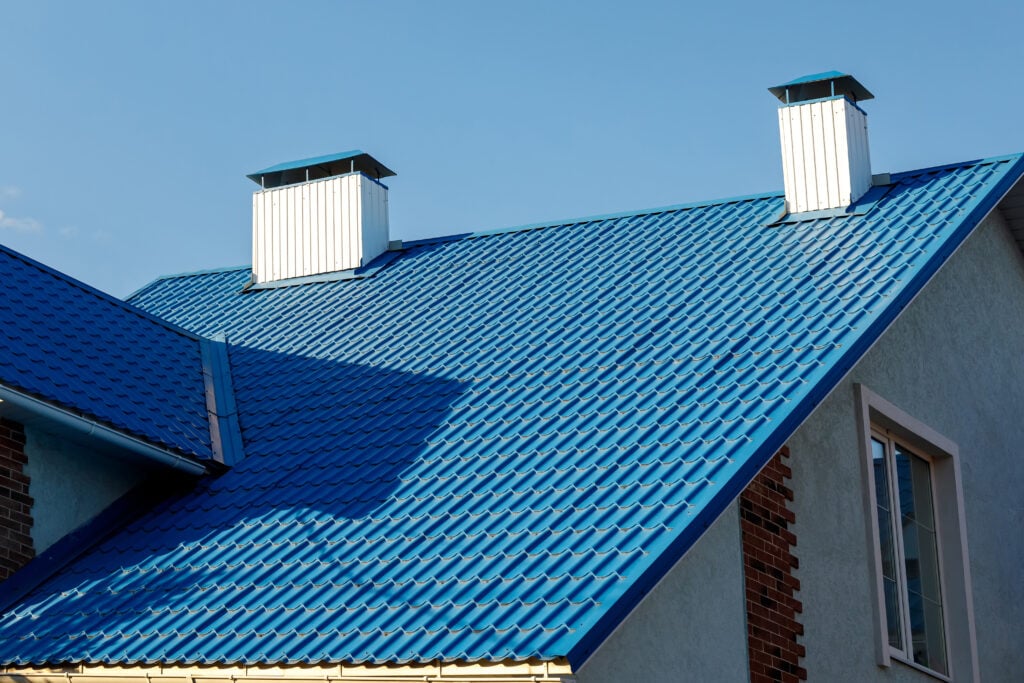
Many homeowners approach metal roof color selection as the last decision in the process, something to pick after the panel style, roofing materials, and contractor are already chosen. In practice, color selection deserves attention much earlier because it influences not just appearance but also energy performance, neighborhood fit, resale appeal, and long-term satisfaction with the investment. A metal roof that performs beautifully but looks mismatched against the home’s siding and trim is a source of regret that compounds every time you pull into the driveway.
For homeowners in Dover, OH and surrounding areas, color selection also intersects with practical performance considerations. Ohio’s four-season climate means a metal roof color works hard in both summer heat and winter cold, and the color’s solar reflectance index affects how much heat the roof absorbs and radiates into the attic space below. Here is why this decision deserves the attention it rarely gets:
- Color directly affects thermal performance: Lighter metal roof colors reflect more solar radiation and reduce attic heat gain in summer, which lowers cooling costs. Darker colors absorb more heat, which can be advantageous in colder climates but increases cooling loads in warm months.
- The wrong color is permanent for decades: Metal roofing systems are designed to last 40 to 70 years. A color chosen hastily without considering the home’s full exterior palette is a decision that cannot easily be undone without repainting or re-roofing.
- Resale appeal depends on broad market preferences: Some metal roof colors have strong universal appeal that translates into broad buyer interest. Others are highly specific to a particular aesthetic that may not resonate with the buyers a home eventually attracts.
- Neighborhood context matters: A color that looks striking in isolation can look dramatically out of place in a neighborhood with established architectural character and color norms. Fitting within the visual context of the surrounding homes is a factor that affects both daily satisfaction and resale value.
- Finish technology affects how color performs over time: Metal roof colors are not simply painted surfaces. They are factory-applied coating systems that use specific technologies to resist fading, chalking, and color shift over time, and those technologies vary meaningfully across manufacturers and product lines.
8 Tips for Choosing the Perfect Metal Roof Color
Each of these tips addresses a specific dimension of the color selection decision, from the practical to the aesthetic. Working through them in sequence gives homeowners a structured framework for arriving at a choice they will be confident in for decades.
1. Start With Your Home’s Fixed Elements
The most reliable starting point for any exterior color decision is the elements of the home that cannot or will not change: the brick or stone on the foundation or facade, the color of existing masonry, the material and color of any permanent cladding, and the architectural style of the structure itself. These fixed elements define the color constraints within which the roof color must work.
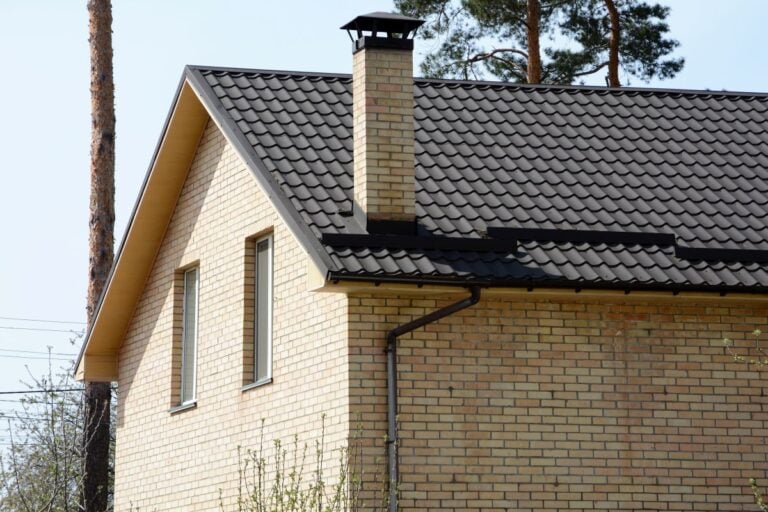
- Red or warm-toned brick exteriors pair well with darker browns, tans, and weathered copper tones rather than cool grays or blues that create color temperature conflict
- Gray or white stone facades are highly versatile and pair well with nearly any neutral metal roof color, from charcoal to slate to weathered zinc
- Homes with significant wood or cedar shake accents often look best with organic tones like bronze, tan, and forest green that complement natural material palettes
2. Consider the Siding Color and How It Pairs With Your Metal Panels
After the fixed architectural elements, the siding color is the most important reference point for metal panel color selection. The relationship between the roof and the siding defines the home’s overall color palette, and that relationship needs to feel either harmoniously similar in tone or deliberately contrasted without clashing.
- Similar tone combinations, such as a charcoal roof over gray siding or a bronze roof over tan siding, create a cohesive, understated look that photographs well and ages gracefully
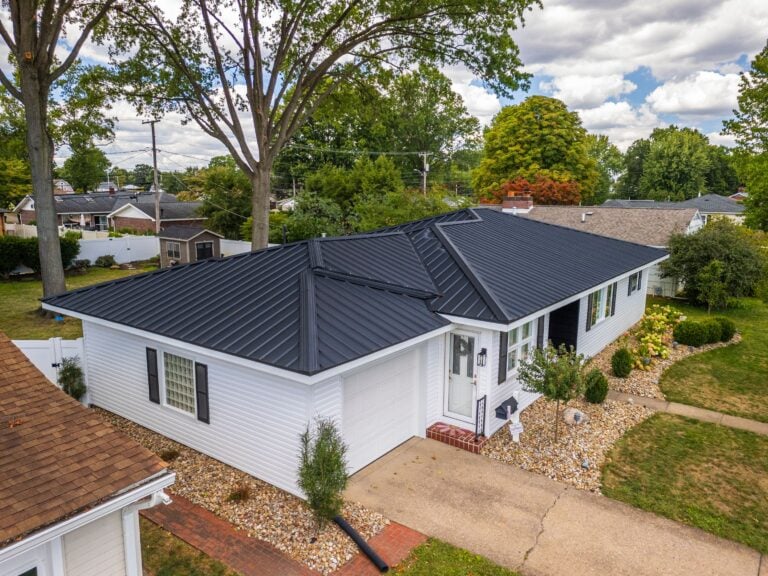
- High-contrast combinations, such as a dark charcoal or matte black roof over white or cream siding, create graphic impact and a contemporary feel that works particularly well on modern and craftsman-influenced homes
- Avoid combinations where the roof and siding are close but not quite matching in tone, as this creates an accidental near-match that reads as a color coordination error rather than an intentional design choice
3. Evaluate How Colors Appear in Different Lighting Conditions
Metal roof colors look different in bright midday sun, in overcast light, in morning and evening light, and in photographs compared to in person. A color that looks perfect on a sample card in an office environment may read very differently once installed across the full surface of a roof under Ohio’s variable sky conditions.
- Request physical sample panels from the manufacturer or contractor rather than relying solely on digital swatches or printed color chips
- Hold the sample panel against your home’s exterior in different lighting conditions at different times of day before making a final decision
- Photograph the sample panel against the siding and trim to see how it reads in a two-dimensional image, since that is how most potential buyers will first encounter the home
4. Think About the Long View From the Street
The most important perspective for evaluating a metal roof color is from the street at the distance a passing driver, pedestrian, or potential buyer would first see the home. Details that are visible up close, individual panel profiles, seam lines, texture variation, often disappear at street distance, and what remains is the dominant color mass of the roof against the facade below it.
- Stand at the street in front of your home and hold a color sample at arm’s length to simulate the visual relationship between roof and facade at distance
- Note how the roof color will read against the sky in the background, since lighter colors tend to disappear into overcast skies while darker colors maintain presence and definition
- In Dover, OH and surrounding areas where tree cover is common, consider how the roof color interacts with the greens and browns of surrounding foliage across different seasons
5. How Corrugated Metal Roofs and Panel Color Affect Energy Performance
Metal roof color is one of the variables that affects how much solar energy a roof absorbs and how much it reflects back into the atmosphere. Whether you are looking at corrugated metal roofs, standing seam systems, or metal shingle panels, the color’s solar reflectance index plays a meaningful role in how the roof performs thermally across all four seasons. The Cool Roof Rating Council and ENERGY STAR both maintain ratings for roofing products that quantify solar reflectance and thermal emittance, and those ratings vary meaningfully across the color spectrum.
- Light colors including white, light gray, light tan, and beige consistently achieve the highest solar reflectance values and deliver the greatest cooling energy savings in warm months
- Medium tones including charcoal, medium gray, and slate occupy the middle of the reflectance range and balance thermal performance with the aesthetic versatility that darker colors provide
- Deep colors including matte black, dark bronze, and forest green absorb the most solar energy, which increases summer cooling loads but can contribute positively to winter heating in Ohio’s colder months
- Many metal roofing manufacturers offer cool-color technology that incorporates infrared-reflective pigments into darker finishes, allowing deep colors to achieve higher reflectance values than their appearance would suggest
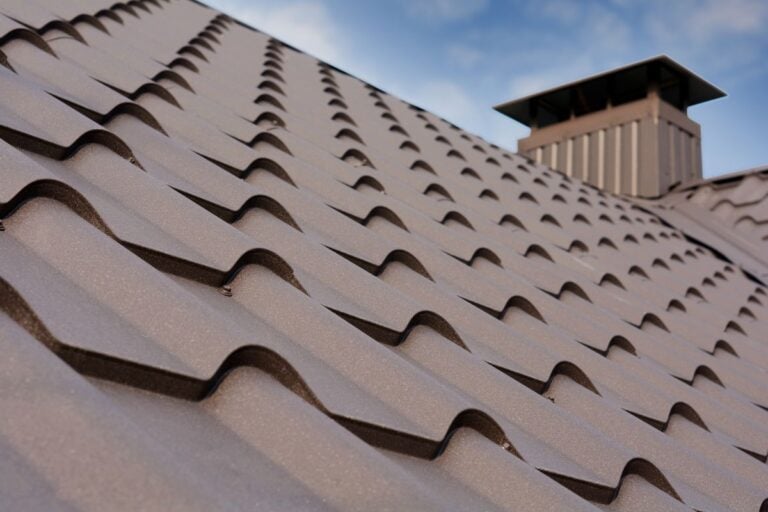
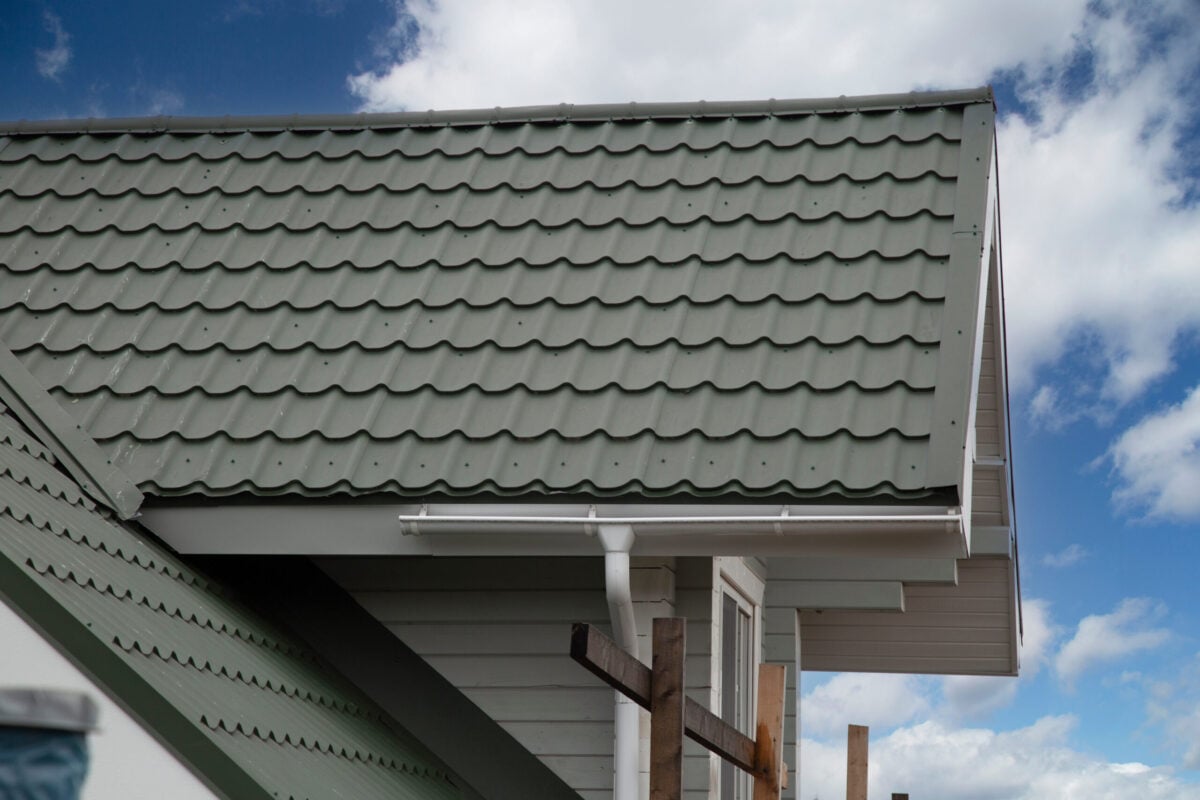
- On corrugated metal roofs specifically, the ribbed profile creates natural shading across the panel surface that slightly moderates heat absorption compared to flat panel systems at the same color value
6. HOA Rules, Local Guidelines, and Metal Roof Cost: What to Confirm Before Choosing
Homeowners associations and some local historic preservation districts impose restrictions on exterior colors including roofing, and discovering those restrictions after a color has been ordered is a costly and avoidable problem. Metal roof cost per square foot can vary based on the specific color and finish selected, particularly for specialty or custom finishes, making it worth confirming color availability and pricing together before committing to a final selection. Before choosing any color, confirm whether any external guidelines apply to your specific property.
- Contact your HOA directly and request the current exterior color approval process and any approved color list that applies to roofing
- Historic district guidelines often restrict roofing colors to historically appropriate palettes that may exclude certain modern metal roof colors
- Some municipalities have adopted energy codes that require minimum solar reflectance values for roofing materials, which can effectively restrict the darkest color options in certain jurisdictions
- Specialty and custom color finishes typically add cost per square foot compared to standard palette options, so confirming pricing alongside HOA approval avoids surprises after the selection is made
7. Look at Installed Examples in Your Area
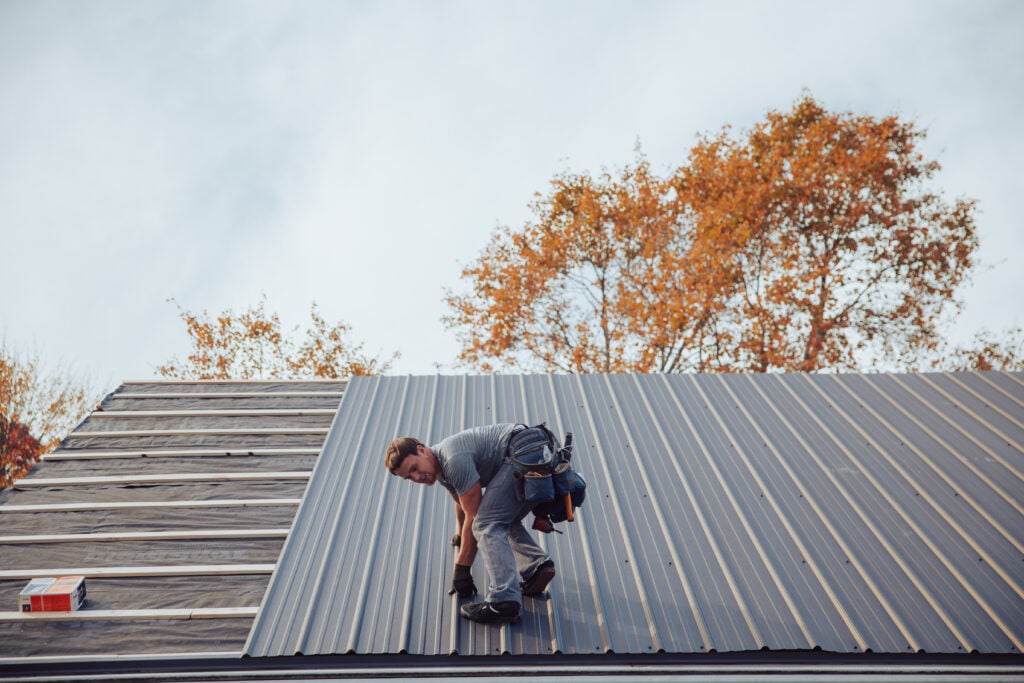
Color samples and digital visualizers provide useful starting points, but nothing replaces seeing a metal roof color installed on an actual home in actual conditions. Driving through neighborhoods in Dover, OH and surrounding areas and noting which metal roof colors look the way you want yours to look provides context that no sample card can replicate.
- Pay attention to how installed colors have aged compared to what you know about when those roofs were installed
- Note which colors read as premium and well-coordinated versus which ones look like they were chosen without reference to the home’s broader exterior palette
- Ask your contractor if they can provide references of homeowners who have had specific colors installed recently, as those homeowners can share firsthand observations about how the color looks in different conditions and seasons
8. Standing Seam Metal Roofs, Ridge Cap, and Trim: Getting Color Coordination Right
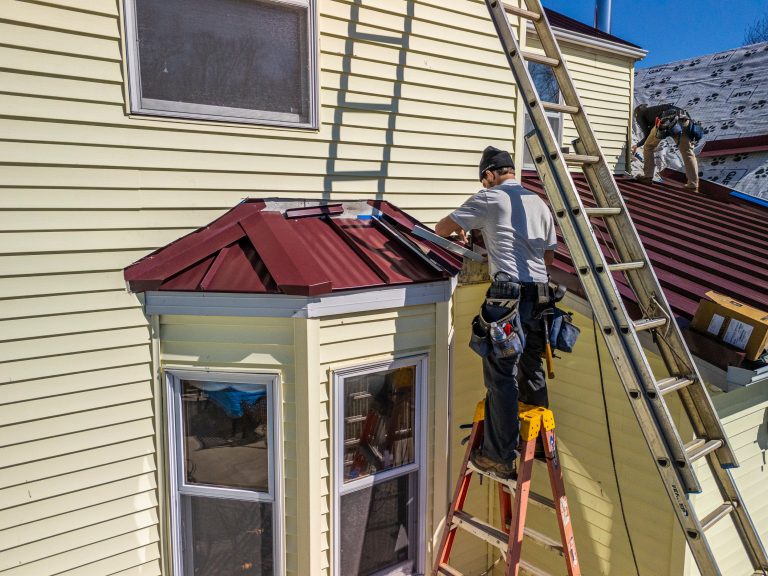
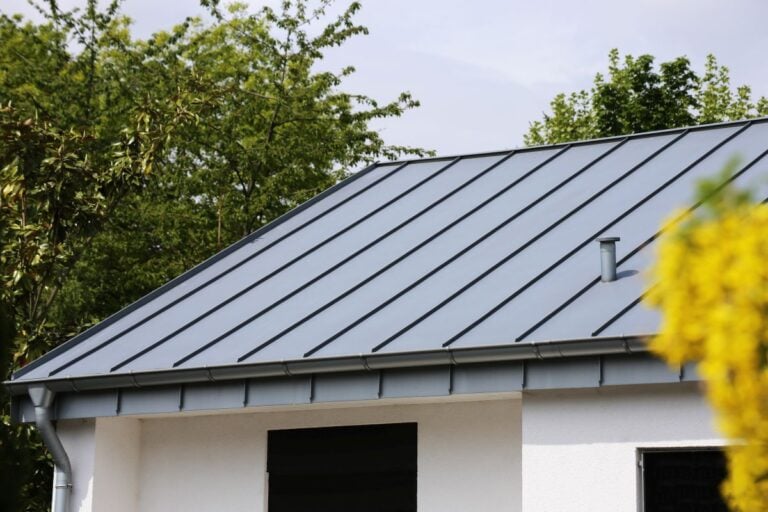
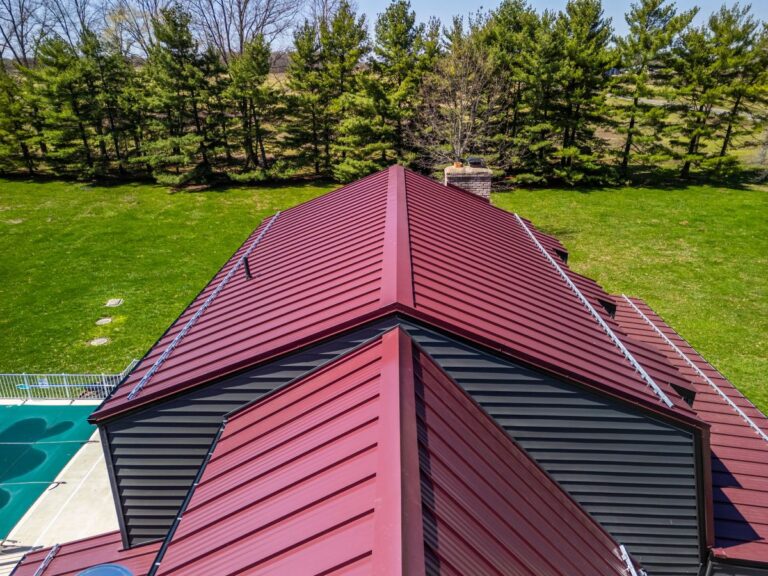
Metal roofing systems include trim components, specifically ridge caps, rake trim, drip edge, and hip caps, that can be ordered in the same color as the field panels or in a contrasting accent color. On standing seam metal roofs in particular, the ridge cap runs along the most visible line of the entire roof and its color relationship to the field panels defines how finished and intentional the full installation looks. This trim color decision shapes the final appearance of the system more than most homeowners anticipate when they are focused on panel color alone.
- Matching trim and ridge cap to the field panel color creates a seamless, uniform look that emphasizes the roof as a single design element
- Contrasting trim in a coordinating accent color adds architectural definition to the roofline and can reference accent colors found elsewhere on the home’s exterior
- Trim and ridge cap color should be decided at the same time as panel color rather than as an afterthought, since both components are ordered together and changes after the fact require re-ordering and additional labor
How Different Architectural Styles Influence Metal Roof Color Choice
Architectural style provides a framework for color selection that narrows the field of viable options and increases the likelihood of a result that feels authentically suited to the home.
Farmhouse and Rural Styles
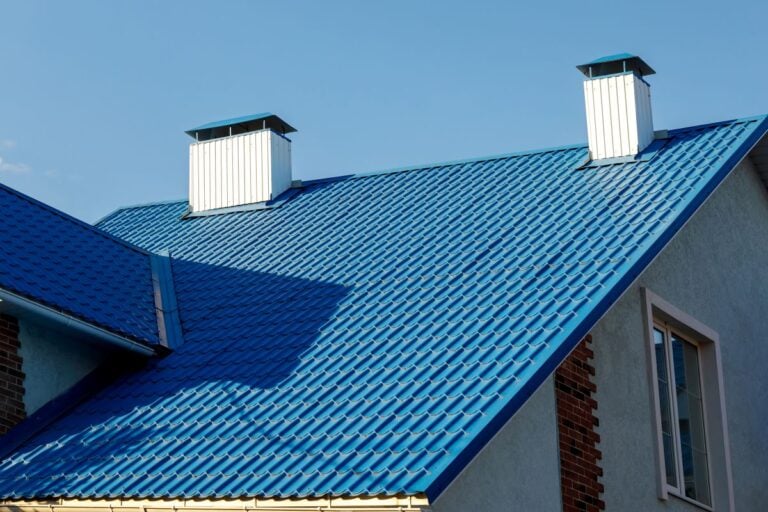
Farmhouse architecture responds well to earthy, grounded color choices that reference agricultural building traditions. Barn red, forest green, weathered zinc, and dark bronze all carry the visual weight and tonal warmth that complement the clean horizontal lines and straightforward geometry of rural residential design. White or cream siding with a dark green or charcoal metal roof is one of the most enduringly popular combinations in this category.
Contemporary and Modern Styles
Contemporary homes favor high-contrast combinations and graphic simplicity. Matte black and deep charcoal are particularly well-suited to modern architecture because they read as intentional design statements rather than safe color defaults. These colors work best against white, light gray, or concrete-toned facades where the contrast is clean and deliberate.
Craftsman and Bungalow Styles
Craftsman architecture uses rich, layered color palettes with warm earthy tones. Slate blue, deep olive, aged bronze, and weathered copper all complement the wood tones, stone accents, and warm-colored brick commonly found in craftsman-style homes. Avoid overly saturated or bright metal roof colors in this context, as they conflict with the restrained, handcrafted aesthetic that defines the style.
Colonial and Traditional Styles
Traditional homes support a range of neutral and classic color choices including slate gray, charcoal, dark brown, and weathered copper. These are colors with historical precedent in residential roofing that feel appropriate against the symmetrical facades and formal proportions of colonial architecture. Bolder or more contemporary color choices can feel incongruous in this context unless the rest of the home’s exterior has been updated to support them.
What to Expect From Steel Roofing Color and Finish Over Time
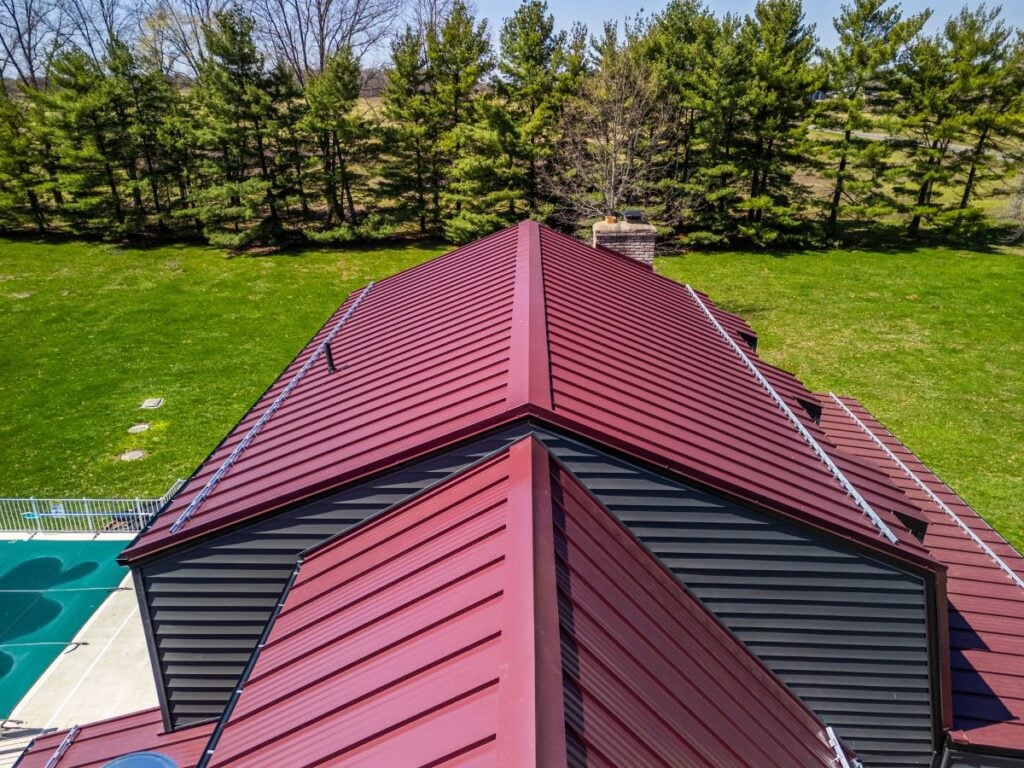
Steel roofing color is applied as a factory finish using coating systems designed to resist fading, chalking, and color shift over decades of UV and weather exposure. Understanding what those coatings do and what they cannot prevent helps homeowners set realistic expectations for how their chosen color will look over the roof’s full lifespan.
Most premium metal roofing manufacturers use Kynar 500 or Hylar 5000 polyvinylidene fluoride coatings, commonly called PVDF finishes. These coatings are the industry standard for color retention and chalk resistance in steel roofing, and they significantly outperform polyester and acrylic finishes in long-term color stability tests.
How Exposed Fastener Panels Handle Color Retention Differently
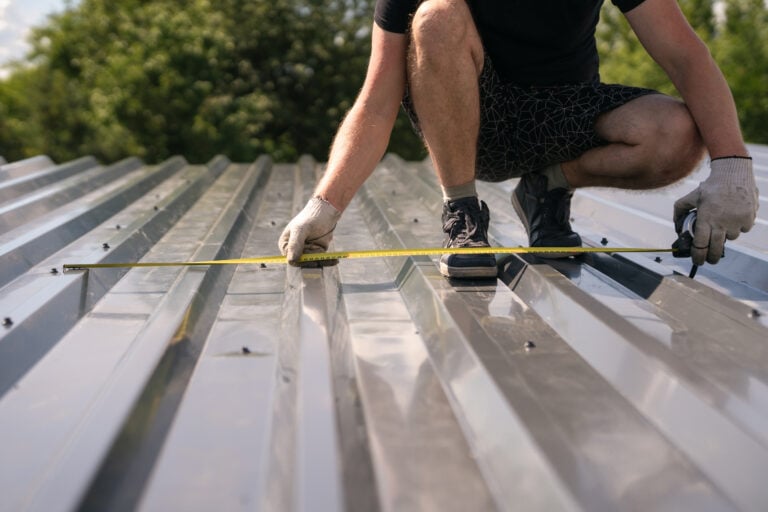
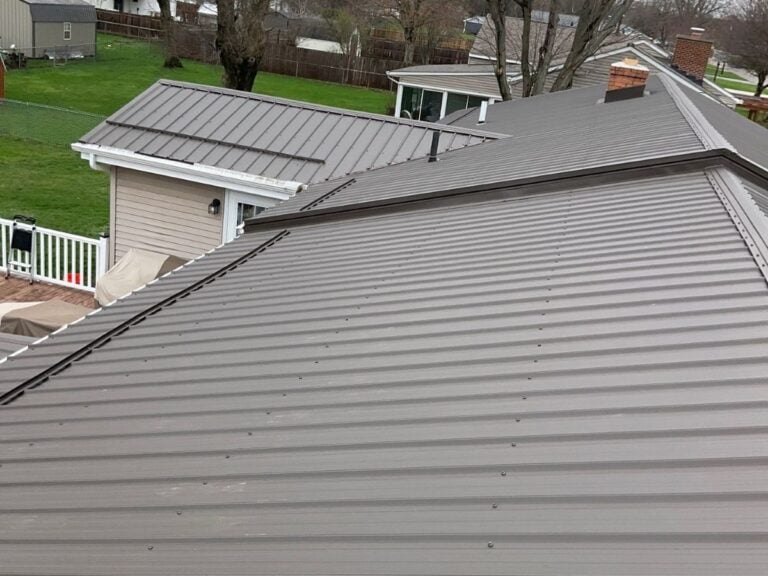
Exposed fastener panels present a specific color retention consideration that standing seam and concealed fastener systems do not share. Because fasteners penetrate the panel face directly, the areas immediately surrounding each fastener are slightly more vulnerable to moisture contact and UV exposure than the sealed field surface. Over time, these fastener locations can develop minor surface variation in color or finish that becomes visible on lighter colored panels before it appears on darker ones.
Choosing a medium-toned color for exposed fastener panel installations reduces the visibility of any long-term variation at fastener locations and extends the period before touch-up or recoating becomes visually warranted. This is a practical consideration that rarely comes up during color selection conversations but is worth factoring in when the panel system involves exposed fasteners across a large roof area.
Even with PVDF coatings, some degree of color change is expected over a 40 to 70-year lifespan. Lighter colors may chalk slightly over time, developing a faint surface haze that reduces reflectance values. Darker colors may show minor fading toward the midpoint of their life. Most manufacturer warranties for premium metal roofing include a specific color retention provision that limits acceptable fading and chalking values over the warranty period, typically measured in delta E units for fading and ASTM D4214 ratings for chalk.
Ready to Find the Metal Roof Color That Works for Your Home?
Color selection is one of the few parts of a metal roofing project where the homeowner’s personal judgment and preferences carry as much weight as any technical specification. The right color for one home may be entirely wrong for another, and the process of finding the right one requires looking at the home’s full exterior picture rather than evaluating a color in isolation.
At Keim Quality Roofing, we work with homeowners throughout Dover, OH and surrounding areas to navigate metal roof color selection with the same care we bring to every other part of a roofing project. We bring samples, discuss the home’s architectural character, and help homeowners visualize how different color choices will read against their specific exterior before any material is ordered. If you are ready to start that conversation, contact us today and let Keim Quality Roofing help you find the color that makes your roof look exactly the way it should.